Istanbul with kids: practical tips for family travel
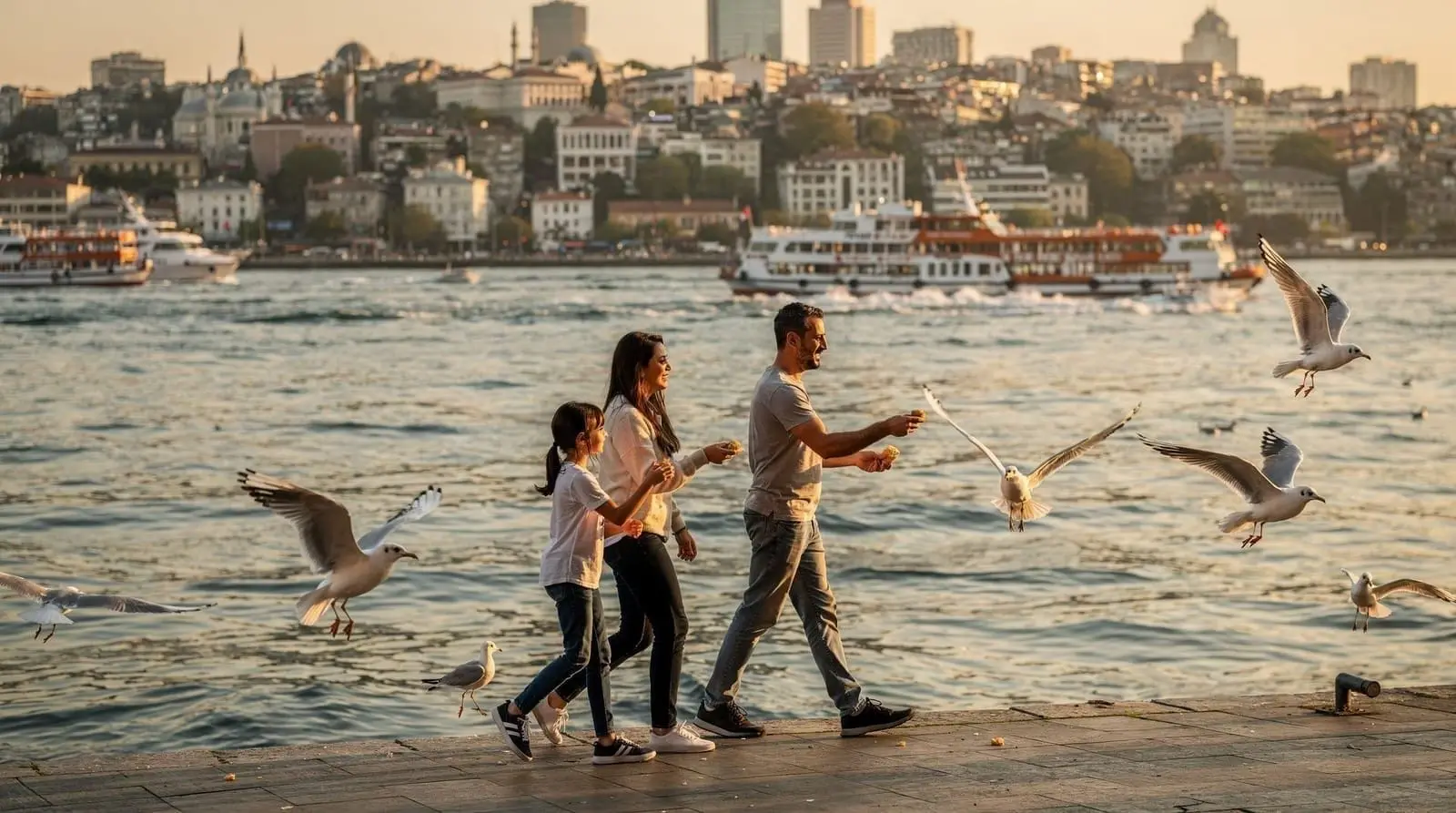
Istanbul with children is more manageable than many families expect. The city is physically compact in its tourist core, public transport is straightforward once you have an Istanbulkart, and Turkish culture is genuinely welcoming to children in a way that feels distinct from northern European or North American norms. That said, the queue-heavy, heat-amplified realities of high season require realistic planning. My own family trip here worked far better than I’d braced for — the moment that sold my kids on the whole city wasn’t a monument at all, it was the ferry ride, seagulls chasing bread thrown off the back deck the whole way across.
| Best age range | Roughly 8–12, though toddlers do fine with the right pacing |
| Getting around | Istanbulkart covers ferry, tram, metro, bus |
| Best free win | Bosphorus public ferry — under 1 USD, genuinely fun |
| Watch for | Summer heat 1–4pm, cobblestones with strollers |
| Where to stay | Sultanahmet (convenience) or Beşiktaş (quieter, 5+ nights) |
What children actually enjoy in Istanbul
Bosphorus ferry: A ride on the public Şehir Hatları ferry from Eminönü to Üsküdar or Kadıköy is a genuine children’s experience — movement, water, views, and seagulls trailing the boat. It costs less than 1 USD per person with an Istanbulkart and feels like an adventure. Most children find this more engaging than another museum.
Basilica Cistern: The underground cistern is consistently popular with children — dark, atmospheric, with the famous upside-down Medusa head columns and shallow water channels. The “Night Shift” late-evening experience (special lighting) is particularly effective. Entry: approximately 600 TRY (mid-2025 — verify). See the Basilica Cistern guide.
Topkapı Palace courtyard: Children can handle the Topkapı Palace grounds even without absorbing the historical detail. The treasury’s jewelled objects, the Harem rooms, and the wide courtyard terraces work well for kids who need to move around. The kitchen complex with its giant cauldrons is usually memorable. More in the Topkapı visiting guide.
Grand Bazaar: Overwhelming and exciting for most ages. The sensory density — colour, noise, smell, motion — is inherently engaging. The risk is separation in a large crowd; keep children close. The Bazaar works well for 45–60 minutes; longer is tiring for everyone. See Grand Bazaar shopping tips.
Princes’ Islands: A car-free island environment is excellent for children. Büyükada offers horse-drawn carriage rides, cycling hire, swimming (in season), and a relaxed pace far from the city. A full-day or half-day family excursion that most children genuinely enjoy. See the Princes’ Islands guide.
Princes’ Islands full-day family tour with lunchHagia Sophia: Children’s reaction to Hagia Sophia depends on age. Under-8s may not absorb it but the scale impresses. Over-10s with any historical context (Byzantines, Ottoman conquest) find it fascinating. The main dome seen from the gallery level is the most impressive view.
What to skip or defer with young children
Long museum interiors: The Istanbul Archaeological Museums and the Museum of Turkish and Islamic Arts are excellent, but primarily for adults with genuine interest. Under-12s find them difficult without specific preparation.
Dinner cruises: Late start (typically 8–9 pm), loud music, adult-oriented entertainment. Not designed for children. A daytime Bosphorus sightseeing cruise is a better family option.
Whirling dervishes ceremonies: The ceremony is quiet and meditative, typically 1 hour. Children over 12 who are interested can appreciate it. Younger children find it difficult to sit still through. See whirling dervishes: what to know.
Hammam in peak heat: Children can visit family-friendly hammams, but the intense heat of the hararet is not recommended for very young children. Check age restrictions with specific hammams.
Sites by age group, side by side
| Site/activity | Toddlers (0–4) | Young kids (5–9) | Older kids (10+) |
|---|---|---|---|
| Bosphorus ferry | Great | Great | Great |
| Basilica Cistern | Good, dark/echoey | Great | Great |
| Grand Bazaar | Tiring past 30 min | Good, 45–60 min | Great |
| Topkapı Palace | Difficult | Fair, courtyards work | Great with context |
| Museums (Archaeological, etc.) | Not recommended | Difficult | Good with interest |
| Whirling dervishes ceremony | Not recommended | Difficult | Good over 12 |
| Princes’ Islands | Great | Great | Great |
Planning the days around your children
The most useful habit is to pair one “big” sight with one easy, free-moving activity each day. A morning at the Basilica Cistern or Topkapı can be followed by a ferry ride or a stretch in a park, so that nobody is dragged from one queue to the next. If you want a ready-made rhythm, the family-friendly things to do in Istanbul guide and the fuller Istanbul with kids guide go deeper on activities by age.
For families who prefer a day-by-day plan, the Istanbul family itinerary lays out a relaxed order of sights. If you are still deciding how long to stay, how many days you need in Istanbul helps you balance ambition against tired legs.
Timing matters as much as choice of sites. The best time to visit Istanbul and the Istanbul in summer guide are worth a look if your school holidays fall in the hottest months, while the Istanbul packing list covers hats, comfortable shoes and layers for children.
Ferries deserve a place on every family day. Ferry hopping on the Bosphorus and the Istanbulkart explainer show how to turn ordinary transport into the highlight of the trip. When your children need a break from monuments, the Princes’ Islands and the Bosphorus offer space and fresh air.
A family-friendly way to see the Bosphorus without the late-night dinner-cruise scene
If a full dinner cruise is off the table for younger kids but you still want the Bosphorus experience beyond the public ferry, a daytime sightseeing cruise hits the same visual highlights — palaces, bridges, waterfront mansions — without the 9pm start and adult-oriented entertainment.
Morning Bosphorus cruise with Spice Bazaar stopPractical logistics
Getting around: The Istanbulkart covers all public transport. The tram T1 from Sultanahmet to Kabataş (connecting ferry terminal) is the most useful family route. The Marmaray (underground train across the Bosphorus) is a novelty children appreciate. See getting around Istanbul.
Strollers: The Old City (Sultanahmet) has significant cobblestones and hills — a carrier or lightweight foldable stroller is more manageable than a full-size pushchair. Ferry gangplanks and tram steps can be tricky.
Food: Turkish food culture is genuinely child-friendly. Bread, cheese, and eggs are everywhere. Börek (cheese or potato pastry) is almost universally liked by children. Simit (sesame bread rings) from street carts work as snacks. Döner in a bread roll is straightforward. Avoid tourist restaurants near major sites — quality and value are both better at a lokanta two streets away.
Heat in summer: July and August are hot and humid. Plan outdoor queuing for early morning (before 9 am). Carry water and hats. The afternoon siesta concept makes sense for families in summer — return to accommodation during the 1–4 pm heat peak and go back out in the evening.
Prayer times at mosques: Mosques close to tourists briefly at each of the five daily prayer times. If you are visiting the Blue Mosque with children, check times in advance and avoid the 20-minute closure window — children waiting outside get restless.
Family-friendly accommodation areas
Sultanahmet: Convenient for all the main sites. Noisy from early morning (mosque calls, delivery traffic). Good option for 3–5-night stays where proximity to attractions is the priority.
Beyoğlu/Karaköy: More neighbourhood feel, good restaurants, slightly further from Sultanahmet sites but manageable. Less early-morning noise.
Beşiktaş: More residential, good ferry connections, Dolmabahçe Palace nearby. Works well for families staying 5+ days.
Full analysis: best neighbourhoods to stay in Istanbul.
Frequently asked questions about Istanbul with kids
Is Istanbul suitable for toddlers?
Yes, with realistic expectations. The ferry rides, the Grand Bazaar sensory experience, and outdoor spaces like the Sultanahmet square work well for toddlers. Major museum visits are difficult. Summer heat requires extra attention. Turkish people universally react warmly to children, which makes logistics easier.
What is the best age to take children to Istanbul?
There is no definitive answer, but 8–12 tends to work well — children are old enough to absorb historical context (Byzantine history, Ottoman architecture) without needing as much active engagement as younger children. Teenagers generally enjoy Istanbul’s food and neighbourhood diversity.
Are there playgrounds in Istanbul?
Yes. Gülhane Park (adjacent to Topkapı) has playground areas. The waterfront parks along the Bosphorus have facilities. Emirgan Park (spring tulip festival location) has open space for children to run. The Princes’ Islands’ natural environment is essentially a giant outdoor space.
Can you take a pushchair on the Istanbul ferries?
Yes, ferries have accessible gangplanks. Trams have steps that require lifting; the bus network is generally more accessible. The main challenge is cobblestones in Sultanahmet.
Is Istanbul safe for families?
Yes — refer to the Istanbul safety guide for the full picture. Families are particularly welcome in Turkish culture; the usual urban precautions (crowded areas, pickpocketing) apply but Istanbul is not a challenging city for family travel.
How many days do we need in Istanbul with kids?
Four to five days lets you cover the highlights at a child-friendly pace with rest afternoons built in, rather than rushing between sites. Our Istanbul for families 4-day itinerary is built around exactly this pacing.
What snacks or meals should we carry for a day of sightseeing?
Simit, fruit, and bottled water travel well and are sold everywhere. For a sit-down meal, a neighbourhood lokanta is faster and cheaper than a tourist restaurant near major sites, and the food is generally milder and more familiar to children than you’d expect.