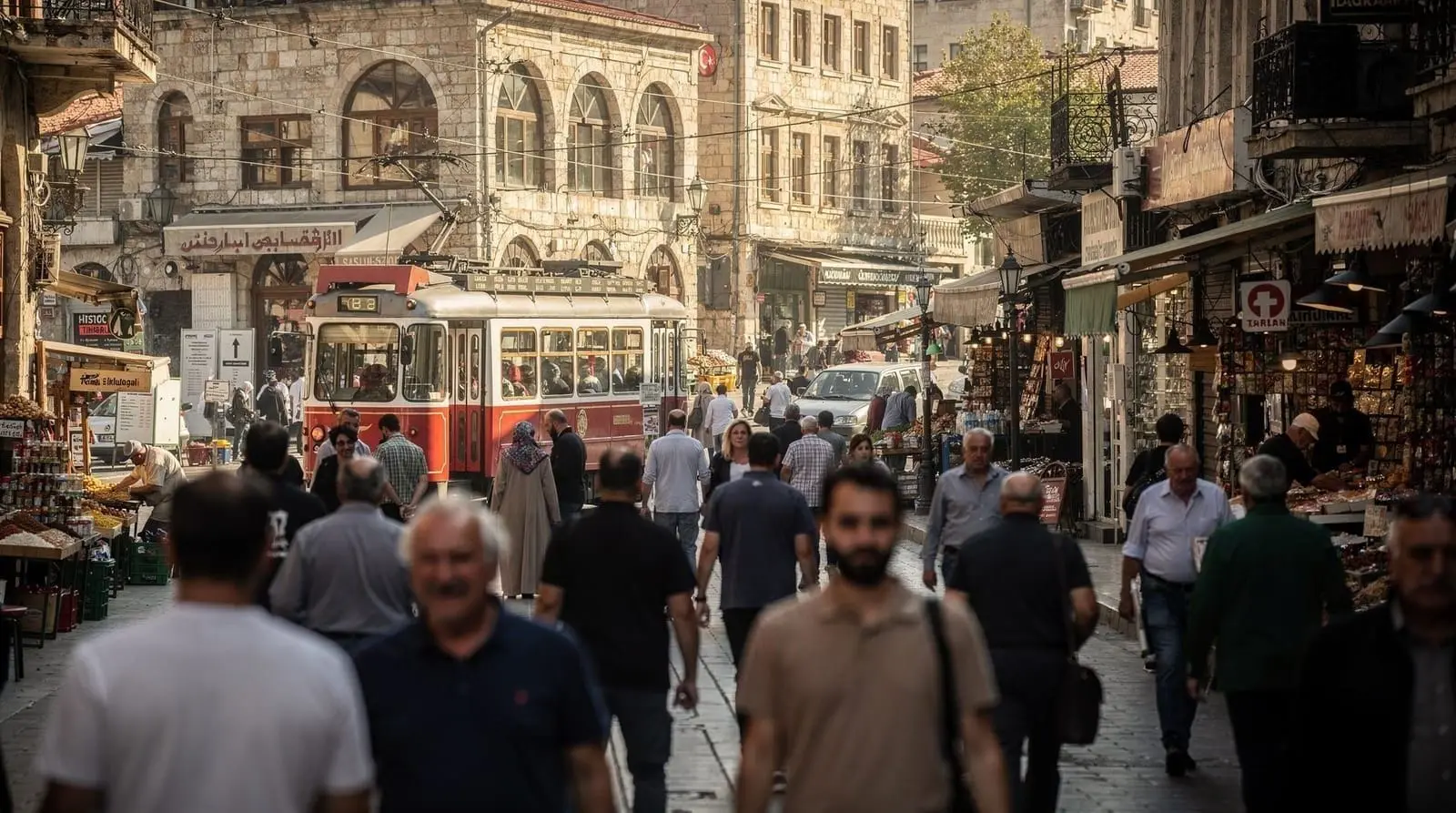
Istanbul scams and how to avoid them
Istanbul has a set of recurring tourist scams that are well-documented, predictable, and avoidable once you know the pattern. None of them involve physical violence or genuine danger. They are confidence tricks designed to extract money from visitors who don’t know what to expect. This guide names them clearly, explains how they work, and gives the specific responses that end the interaction. I fell for a version of the shoe-shine drop on my first trip — knew about it, recognised it happening, and still felt awkward saying no out loud. It gets easier with a script ready in advance, which is really the point of this whole guide.
| How many recurring scams | About 4–5, well-documented and repetitive |
| Physical danger involved | None — these are confidence tricks, not crime |
| Where they cluster | Sultanahmet, Taksim/İstiklal, Grand Bazaar approaches |
| Best single defence | A firm, unapologetic “no” and keep walking |
| Highest-cost scam | The friendly bar invitation (can run into thousands of lira) |
The shoe-shine drop
How it works: A shoe-shiner walks ahead of you and “accidentally” drops his brush. As you pick it up or react, he begins enthusiastically shining your shoes. When he finishes — without agreeing on a price — he requests an inflated fee (100–500 TRY or equivalent) and becomes insistent or confrontational.
Where it happens: Near tourist sites in Sultanahmet, Eminönü, the Spice Bazaar area.
How to respond: Keep walking. If he is already touching your shoes, firmly say “hayır” (no) and walk away. Do not apologise or engage — this gives time for his associate to appear and increase the pressure. You owe nothing for a service you did not agree to.
The friendly bar invitation
How it works: An apparently friendly, well-dressed local (often near Taksim, İstiklal, or Sultanahmet) strikes up a conversation. He invites you for a drink “at a great bar” he knows. The bar is complicit in the scam. You receive an inflated bill — sometimes thousands of lira — and find it difficult to leave.
Where it happens: Taksim, İstiklal Avenue, tourist hotel areas. Less common in Karaköy and Beyoğlu’s established bars.
How to respond: Do not follow strangers to venues you did not choose. If a “local” finds your company specifically interesting enough to invite you for drinks within minutes of meeting you, the financial motive is almost certain. A polite but firm decline ends it.
The fake mosque entrance fee
How it works: Someone near the entrance of a mosque (particularly the Blue Mosque) claims you need to pay an entry fee, buy a ticket, or pay for a scarf/headcovering. In reality, the mosque is free to enter, and the scarves at the entrance are lent for free.
Where it happens: Blue Mosque entrance, occasionally near other major mosques.
How to respond: Politely ignore them and walk to the actual mosque entrance. If in doubt, look for official signage. Official mosque staff wear identifying uniforms; unofficial touts do not. Most major Istanbul mosques are free — see free mosques in Istanbul.
Taxi fraud
Istanbul taxis have a documented problem with several distinct fraud patterns:
No meter: The driver proposes a “flat fare” rather than running the meter. This flat fare is invariably higher than the metered amount for any normal tourist journey.
Meter manipulation: The meter ticks faster than it should, or the night rate (typically 2x) is running during daytime without disclosure.
Banknote switch: You hand over a 200 TRY note; the driver shows you a 20 TRY note and claims that’s what you gave them.
Circuitous routing: Especially common from IST airport — taking a longer route to inflate the meter.
How to respond: Use BiTaksi or Uber (which dispatches a licensed taxi but through an app, with fare shown upfront). If taking a street taxi, insist the meter is visible and running before moving. State the note denomination clearly when handing over cash. For airport transfers, the private transfer options are often worth it for the certainty: see IST airport to city centre.
Private airport transfer with meet & greetFor a broader look at the transport landscape beyond taxis, our getting around Istanbul guide covers the Istanbulkart-based alternatives that sidestep this whole category of scam.
Carpet and rug pressure sales
How it works: A person directs you into a carpet shop, often with a “just look, no obligation” invitation. Inside, the sales pressure is sustained and can last 30–60 minutes if you stay. Prices are inflated; the “special price for you” is not actually special.
Where it happens: Near the Grand Bazaar, Sultanahmet, and any area with sustained tourist foot traffic.
How to respond: Do not enter shops after being directed there by strangers. Shop independently — the Grand Bazaar has hundreds of carpet vendors; walk in on your own terms and you maintain full control. See Grand Bazaar shopping tips for self-directed shopping guidance.
Restaurant menu switching
How it works: A restaurant near tourist sites shows a menu with lower prices in the window. When the bill arrives, the prices are different (higher version of the menu, service charges added, items listed you don’t recognise).
How to respond: Ask to see the menu before sitting down and confirm the prices are current. Restaurants that pull this typically target people who look rushed or distracted. Moving one or two streets away from the main tourist corridors almost eliminates this risk.
Exchange rate confusion
How it works: A vendor, taxi driver, or shop owner quotes a price in USD or EUR but calculates change at an unfavourable exchange rate — often significantly below the real market rate.
How to respond: Pay in TRY wherever possible. Know the approximate USD/TRY exchange rate before you travel (it changes frequently given Turkish inflation). If paying in foreign currency is unavoidable, calculate what the TRY equivalent should be.
What is not a scam (common misconceptions)
Tea offers: Being offered çay at a shop is standard hospitality, not a required purchase. You can drink the tea and leave without buying anything.
People asking where you are from: Genuine curiosity, not a setup in most cases. Brief friendly conversations happen in Istanbul. The red flag is when the conversation immediately pivots to a recommendation to visit a specific shop or bar.
Tipping: Tipping 10–15% at restaurants and 20% to hammam attendants is standard and legitimate — not a scam.
The “free tour guide” approach
How it works: Someone near a major site (often Sultanahmet, sometimes Topkapı or the Grand Bazaar) offers to show you around “for free” or “as a student practising English.” The tour happens, and at the end an expectation of a large tip — sometimes framed as mandatory — appears, or the tour steers you toward a shop where they earn commission.
How to respond: A genuine free walking tour is a specific, bookable product with a set meeting point and clear tip-based model explained upfront — not a stranger who approaches you unprompted. If you want a proper guided introduction to the Old City, book one in advance rather than accepting a street offer.
Short guided walking tour of the Old CityWhy these scams persist
Istanbul’s scam landscape survives because it’s low-risk for the operators and the amounts, while annoying, are rarely large enough for victims to pursue formally. None of it reflects a city that is dangerous — see our is Istanbul safe for tourists breakdown for the wider safety picture. The pattern repeats because forewarned travellers are a minority; the moment you recognise a scam mid-interaction, most operators disengage immediately rather than escalate, precisely because a confrontation with someone who clearly knows the game isn’t worth their time. For a wider list including scams that overlap with general tourist-trap behaviour rather than outright fraud, see our Istanbul tourist traps guide and scams to avoid guide.
Planning your days around the pressure points
Most of the situations above come from being rushed, lost or tired in a crowded spot. A little planning removes much of that. Read the Istanbul first-time tips before you land, and keep a simple plan in mind, such as the Istanbul in one day route if your time is short. When you know where you are heading next, touts have far less room to redirect you.
The areas where approaches are most frequent are also the ones you will want to see. Sultanahmet and Taksim reward a visit, so go in with the scripts from this guide rather than skipping them. If you want somewhere calmer between the big sights, the Kadıköy neighbourhood guide and the Balat and Fener walking guide are good places to reset.
Money habits help as well. Our Istanbul travel budget guide helps you recognise a fair price, which is the best protection against an inflated bill, and the Istanbul tourist pass review is worth reading before you buy any pass from someone on the street.
The hub for honest Istanbul travel
For the broader picture of what to watch for — and what to enjoy without suspicion — see the honest Istanbul hub which covers tourist traps, overrated experiences, and what the city does genuinely well.
Frequently asked questions about Istanbul scams
Is Istanbul particularly scam-heavy compared to other cities?
It has a specific reputation for the documented scams above. Compared to cities like Paris or Barcelona for pickpocketing, or some Southeast Asian cities for more aggressive scams, Istanbul’s scam landscape is narrow and predictable. The same 4–5 scams recur across all reports. A forewarned traveller is well-protected.
What should I do if I have already been scammed?
For minor financial losses (taxi overcharge, inflated restaurant bill), the practical advice is to pay what is reasonable and leave. For larger amounts, the Tourist Police in Sultanahmet can take reports. File a report for record purposes; recovery of money is uncommon.
Are tour operators in Istanbul generally legitimate?
Reputable platform-vetted operators (GYG, Viator, etc.) are generally legitimate. Walk-up tours offered by strangers near major sites warrant more scrutiny — ask for documentation, see reviews, confirm the itinerary in writing before paying.
Is bargaining expected in the Grand Bazaar?
Yes — see bargaining in the bazaar guide for how this works. The initial quoted price is rarely the final price for non-food items. This is negotiation, not a scam.
Is it rude to just say “no” and walk away?
No. A firm, unapologetic “no” or “hayır” followed by walking away is the correct, socially acceptable response to any unsolicited approach in a tourist area. Turks dealing with these same operators respond the same way; it is not perceived as impolite by locals.
Do these scams happen outside Sultanahmet and Taksim?
Rarely in a meaningful way. Kadıköy, Karaköy, Balat and Fener see very little of this activity because they’re less saturated with first-time tourists. If you want a lower-pressure area to explore without constant approaches, those neighbourhoods are a good choice.