Best Turkish breakfast spots in Istanbul
| Where | Karaköy, Kadıköy Pazarı area, Cihangir, Beşiktaş market |
| Cost | Around 100–350 TRY per person depending on style and neighbourhood |
| Time needed | Allow 1–2 hours; it’s a slow, shared-table meal, not a quick stop |
| Getting there | T1 tram to Karaköy; ferry or Marmaray to Kadıköy |
| Best time | 9:00–10:30 am on weekdays; arrive before 10am on weekends |
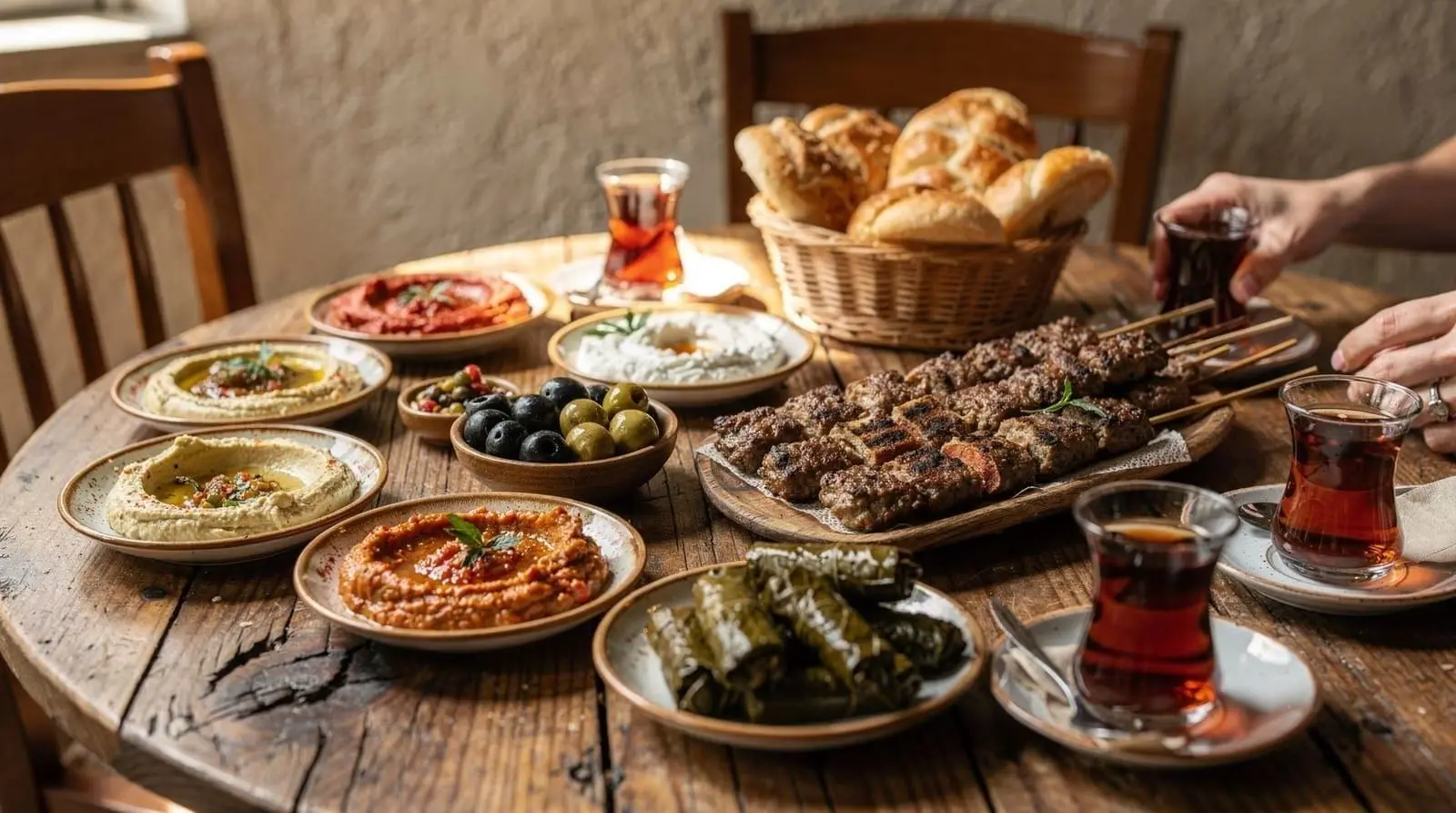
The Turkish breakfast spread is one of the more distinctive meal experiences in Istanbul. A proper kahvaltı is not a continental breakfast — it is a shared table of 15–20 small components: white cheese, olives (black and green), tomatoes, cucumber, honey, clotted cream (kaymak), eggs in various forms, pastries, fresh bread, and above all, çay in endless small glasses. Getting this right requires finding the places where it is done well, which are not always the ones nearest the major sites.
What a proper Turkish breakfast includes
Before recommending places, the components:
- Beyaz peynir (white cheese, similar to feta): One of the foundations
- Kaşar (yellow semi-hard cheese): Usually present as a second cheese
- Siyah and yeşil zeytin (black and green olives): Multiple varieties
- Menemen: Eggs scrambled with tomatoes, green pepper, and sometimes onion — a distinct dish, not just scrambled eggs
- Sahanda yumurta: Fried or baked eggs in a small copper pan
- Sucuklu yumurta: Eggs fried with Turkish beef sausage (sucuk)
- Bal ve kaymak: Honey (ideally plateau honey, çiçek balı, or chestnut honey) served with clotted cream
- Börek: Flaky pastry, usually with cheese or spinach filling
- Ekmek: Fresh white bread, typically brought continuously throughout the meal
- Çay: Black tea served in the tulip-shaped glass, refilled throughout
Van kahvaltısı (Van-style breakfast) adds additional components from the eastern Turkish city of Van — more cheese varieties, dried fruit, specific local condiments. It is a more elaborate and expensive version.
Where to eat breakfast in Istanbul
Karaköy and surrounding streets: The neighbourhood that most food-focused Istanbul visitors gravitate toward for breakfast. Karaköy Güllüoğlu (the baklava institution) opens early for breakfast items. Multiple small cafés on the streets toward Galata Tower serve proper kahvaltı. Prices: 150–250 TRY per person (mid-2025 estimates — verify before visiting; prices reflect Turkey’s inflation trajectory).
Van Kahvaltısı Salonu and similar specialists: Van-style breakfast houses appear in several Istanbul neighbourhoods. The Beşiktaş market area has concentrated good options. Cihangir neighbourhood (Beyoğlu hillside) has independent cafés with strong breakfast reputations — a walk through the neighbourhood in the morning will surface several obvious options. Prices for Van-style breakfast: 200–350 TRY per person.
Kadıköy Pazarı area: The covered market on the Asian side opens early; the breakfast cafés surrounding it (particularly toward the Moda tram line) are neighbourhood institutions serving workers and residents before the tourist lunch crowd. Prices here are typically 100–180 TRY per person for a full spread, making this the best-value serious breakfast in Istanbul.
Neighbourhood lokantas: Many working-class lokantas in residential areas serve a simpler version — eggs, cheese, olives, bread — for 60–100 TRY. This is not the full spread but it is genuinely good food at very low cost.
What to avoid: Sultanahmet hotel breakfasts (often mediocre at significant markup) and tourist-facing cafés on Divanyolu Caddesi that advertise “English Breakfast” alongside “Turkish Breakfast” — the Turkish option is usually the same in both.
The breakfast + food tour combination
A guided street food tour that begins with breakfast items provides context alongside the eating — guides explain the regional origins of specific cheese styles, the difference between local and industrial honey, and the history of the börek tradition. Useful for first-timers who want to understand what they’re eating.
For a broader picture of Istanbul’s food landscape: a first-timer’s guide to Turkish food. The dedicated best Turkish breakfast guide covers additional address-level picks if you want more options beyond those listed here.
Authentic food tour on the Asian side in Kadıköy pairs well with a breakfast start if you’re basing yourself on that side of the city.
Pairing breakfast with a neighbourhood morning
Breakfast works best as the anchor of a slower morning rather than a rushed stop before sightseeing. In Karaköy, a breakfast followed by a walk toward the Galata Tower and down to the fish market covers the neighbourhood’s best angles before the midday crowds arrive. In Kadıköy, breakfast near the covered market naturally leads into browsing the market stalls and the Moda waterfront, without needing to rush back across the Bosphorus. If you’d rather have a guide handle the logistics and recommendations, the Istanbul food tours guide and where to eat in Istanbul both cover breakfast-inclusive options alongside broader dining advice.
Building breakfast into your itinerary
A kahvaltı changes the rhythm of a day, so it helps to plan around it rather than squeeze it in. If food is a priority of your trip, the Istanbul foodie itinerary for 2 days is built around exactly this kind of slow, shared meal. For a broader look at what to eat after breakfast, the Istanbul street food guide and the Turkish food guide cover the rest of the day’s options, and the Karaköy and Kadıköy destination pages help you decide which side of the water suits your plans.
Timing and logistics
Breakfast in Istanbul runs from approximately 8:00 am to 12:00 pm (noon), with the best atmosphere from 9:00 to 10:30 am. On weekends, popular breakfast spots fill up; arriving before 10:00 am prevents a wait. Weekday mornings are more relaxed.
The morning is also the best time for visiting sites before the tourist peak. A breakfast at 8:30–9:30 am in Karaköy, followed by a 10:00 am arrival at Hagia Sophia or the Basilica Cistern, combines the two efficiently. Both the major Sultanahmet sites and most good breakfast spots are accessible via the T1 tram.
Making çay at home vs drinking it in Istanbul
The çay experience at breakfast is worth a brief note: the Turkish çay is not brewed in a cup but in a double-stacked kettle (çaydanlık). The tea is strong in the upper pot; it is diluted to preference with water from the lower pot. The tulip glass is the correct vessel. The ritual of continuous refills throughout a long breakfast is part of the experience. At a good breakfast restaurant, çay is essentially unlimited. If you want to go further into Turkish hot drinks, the Turkish coffee guide is the natural next read, and the Istanbul public transport guide explains how to reach the breakfast neighbourhoods without fuss.
Frequently asked questions about Turkish breakfast in Istanbul
Is Turkish breakfast always sweet?
No — it is principally savoury, with one sweet component (the honey and kaymak). The predominant flavours are salty (cheese, olives), fresh (tomatoes, cucumber), and eggy. The honey and kaymak component is the sweet note in an otherwise savoury spread.
Can vegetarians eat a full Turkish breakfast?
Yes — a traditional Turkish breakfast is largely vegetarian (eggs, cheese, olives, bread, vegetables, pastries). The sucuklu yumurta (eggs with sausage) is the main meat component and is easily omitted or replaced.
How much does breakfast cost in Istanbul?
A proper kahvaltı spread at a mid-range neighbourhood restaurant costs 150–300 TRY per person (approximately 4.50–9 USD at mid-2025 exchange rates). Van-style breakfast tends toward the higher end. A simpler eggs-and-cheese breakfast at a lokanta runs 60–100 TRY.
What is the difference between a Turkish breakfast and a continental breakfast?
Scale, primarily. A Turkish breakfast is 15–20 distinct items; a continental breakfast is 5–6. A Turkish breakfast is a meal designed for a slow, leisurely morning; continental breakfast is functional fuelling. The çay refill culture means there is no end time — you leave when you choose to.
Should I book ahead for a popular breakfast spot?
For the well-known Karaköy and Cihangir addresses on a weekend morning, arriving early (before 10 am) works better than a reservation, since most are informal, walk-in cafés. If a specific restaurant explicitly offers reservations, take one for a weekend visit — a few of the more established spots do fill their tables by mid-morning.
Is a hotel breakfast in Istanbul ever worth it?
Occasionally, if the hotel is upmarket and includes a genuine kahvaltı spread rather than a generic continental buffet — but even then, a good neighbourhood breakfast is usually better value and more authentic. Sultanahmet hotel breakfasts specifically have a poor reputation among repeat visitors for mediocre quality at inflated prices.