Whirling dervishes Istanbul: which show to book in 2026
Istanbul: Hodjapasha Whirling Dervishes Show & Exhibition
Duration: 1 hour
What the whirling dervishes ceremony actually is
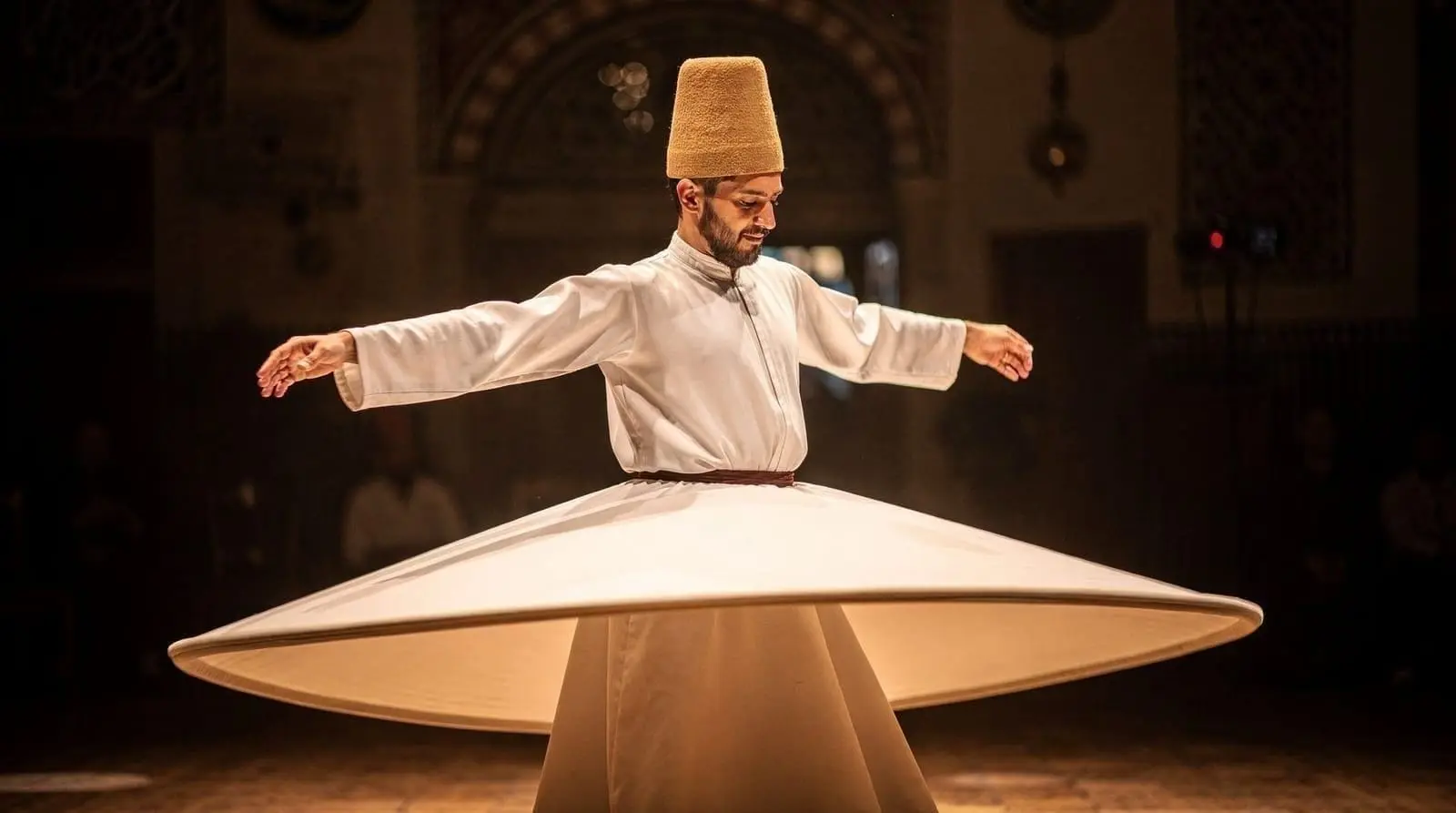
The Mevlevi Sema (whirling dervishes ceremony) is a Sufi spiritual practice founded in the 13th century by the followers of Rumi, the Persian poet and mystic who settled in Konya. The turning — performed by dervishes in long white robes and tall camel-hair hats — represents the soul’s mystical journey toward truth and divine union. The right arm is raised (receiving grace from God) and the left arm faces down (transmitting grace to earth).
UNESCO recognised the Mevlevi Sema ceremony as Intangible Cultural Heritage in 2008. It continues to be practised as a living spiritual tradition by Mevlevi orders in Turkey and internationally.
Istanbul has several venues where ticketed performances are held for visitors. They range from purpose-built tourist shows to genuine ceremonial spaces with authentic performers.
The three main options compared
1. Hodjapasha 1-hour show
The most consistently praised venue in Istanbul for this experience. Price range: approximately 1 400–1 800 TRY (38–50 USD / 34–45 EUR) per person as of mid-2026.
What is included: 1-hour Sema ceremony in the Hodjapasha Cultural Center (a converted 15th-century Ottoman hammam), programme notes, Mevlevi art exhibition in the lobby.
Who it suits: most visitors who want the best combination of venue quality, atmosphere, and performance standard. The converted hammam interior — circular, domed, intimate — is acoustically and visually excellent for the ceremony.
Watch out for: this is the most popular option and sells out earliest. Book well in advance, especially in peak season. The small venue capacity (typically around 100–150 people) keeps the atmosphere intimate but means availability is limited.
2. Mevlevi Sema ceremony
A version held at a different Istanbul venue, typically with more emphasis on the ceremonial and spiritual aspects of the Sema. Price range: approximately 1 200–1 600 TRY (33–44 USD / 30–40 EUR) per person.
What is included: full Sema ceremony, programme notes.
Who it suits: visitors who want a slightly more ceremonial atmosphere than the Hodjapasha show; travellers whose Hodjapasha tickets sold out.
Watch out for: check the specific venue for this option — it varies by listing. The Galata Mevlevi Lodge (Galata Dergahı) near Galata Tower is a historically significant venue with actual Mevlevi order connections and is preferable if available. Some versions of this option are held in hotels or converted spaces with less atmosphere than Hodjapasha.
3. Ceremony next to Hagia Sophia
A 55-minute ceremony at a venue in Sultanahmet, near Hagia Sophia. Convenient for visitors staying in the old city. Price range: approximately 1 100–1 500 TRY (30–41 USD / 27–37 EUR) per person.
What is included: Sema ceremony, programme booklet.
Who it suits: visitors staying in Sultanahmet who prefer a short walk to the venue; travellers pairing the show with an evening in the old city.
Watch out for: the venue quality and performance standard for this option varies more than the Hodjapasha offering. Read recent reviews carefully before booking. Some reviewer reports mention larger groups and a more rushed experience.
How to choose
Prioritise Hodjapasha if you have any flexibility — the venue is exceptional and the performances are consistently high quality. Book early.
Choose the Mevlevi Sema option if Hodjapasha is sold out and you want a proper ceremonial experience rather than a tourist-package show.
Choose the Sultanahmet venue if convenience is the main factor and you are pairing the show with dinner in the old city.
The tourist vs authentic debate
The legitimate concern is that ticketed tourist shows reduce a spiritual practice to entertainment. Here is an honest perspective: the Mevlevi order has never been purely monastic. Sema ceremonies have historically been performed at public gatherings, for visiting dignitaries, and in courtly settings. The Istanbul shows are in this tradition — public, ticketed, but performed by genuine practitioners.
What you will not experience in a ticketed show: the hours of meditation and prayer that precede a private ceremony; the extended post-sema zikr (devotional chanting); the intimate community context of a lodge gathering. If these elements matter to you, Konya in central Anatolia (where Rumi is buried) holds free public ceremonies on certain dates that are closer to the original tradition.
For most Istanbul visitors, the ticketed show is a meaningful introduction to Sufi practice and a genuinely beautiful 1-hour experience.
Practical information
Timing: most shows run either at 19:30 or 21:00. Hodjapasha typically offers one performance per evening. Confirm your session time at booking.
Duration: 55–75 minutes depending on venue.
Location pairing: Hodjapasha is a 5-minute walk from the Grand Bazaar and Sultanahmet. A natural evening sequence is: afternoon at Topkapı Palace or Basilica Cistern, early dinner at a nearby restaurant (Hamdi at Eminönü is convenient), then the Hodjapasha ceremony.
After the show: the Sultanahmet area is quiet in the evening. Beyoğlu is 25 minutes away by tram and offers more evening options — bars, restaurants, live music. See the Beyoğlu neighborhood guide for suggestions.
For broader cultural Istanbul, see the shows and nightlife guide and Turkish night show guide.
Frequently asked questions about the whirling dervishes show
Is the whirling dervishes show authentic or just for tourists?
The performers are genuine practising members of Mevlevi orders. The shows are adapted for tourist audiences — timed, ticketed, and in comfortable venues — but the ritual itself and the performers are authentic. They are not spontaneous religious gatherings but they are not mere theatre either.
What actually happens during the ceremony?
The Sema opens with ney flute improvisation, proceeds through a eulogy and drum salute, then the dervishes perform four salam movements in long white robes. The ceremony closes with prayers. Most ticketed shows run 55–75 minutes.
Is there a dress code?
Smart casual at cultural venues. Women do not need head coverings at Hodjapasha or similar cultural centres. If the show is held on mosque premises, mosque etiquette applies.
Do you need to stay silent?
Yes. Respectful quiet is expected throughout. No talking, no flash photography. Low-light photography is permitted at most venues.
How far in advance should I book?
Hodjapasha sells out frequently in peak season. Book 3–5 days ahead at minimum, 1–2 weeks in July–August.
What is the Hodjapasha Cultural Center?
A 15th-century Ottoman hammam converted to a cultural venue near the Grand Bazaar. Domed interior with excellent acoustics. Considered one of Istanbul’s best venues for the Sema ceremony.
Are children welcome?
Yes, but children who cannot stay quiet for 60–75 minutes will struggle. Most operators recommend ages 6 and above.