Selçuk town guide — the best base for visiting Ephesus
Selcuk: Full-Day Ephesus and House of Virgin Mary Tour
Why should I stay in Selçuk rather than Kuşadası for Ephesus?
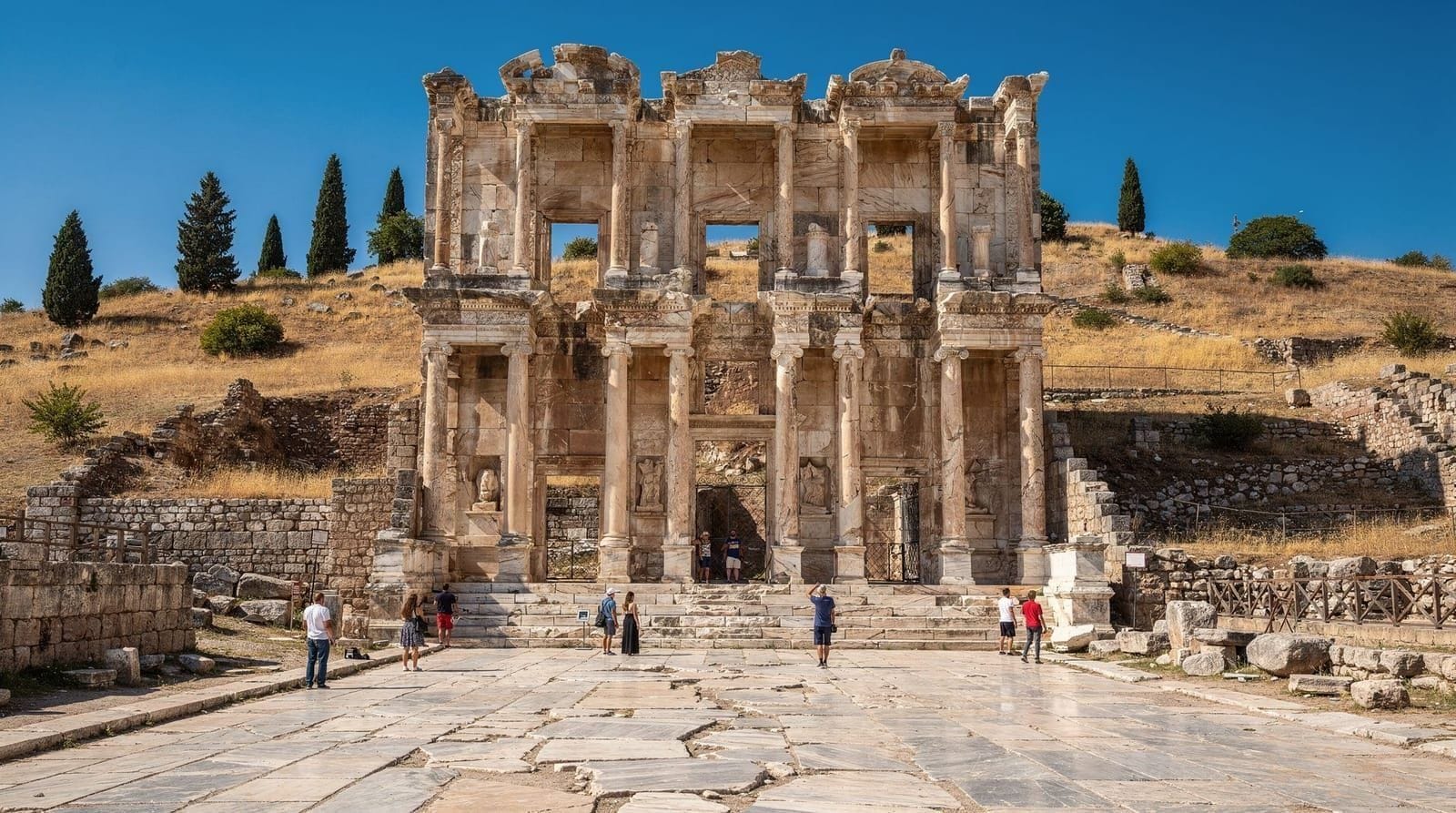
Selçuk is 3 km from the Ephesus Upper Gate — walkable or a short taxi ride. It is a local Turkish market town with good budget accommodation, the Ephesus Museum, and the Basilica of St. John. It is significantly cheaper and more authentic than the cruise-oriented resort town of Kuşadası.
Selçuk: the town that archaeological history made
Selçuk is a small market town of approximately 30,000 people in the İzmir province, sitting in a plain between the hills at the foot of ancient Ephesus. It is not a tourist resort. It does not have a beach. What it has instead is proximity to one of the great archaeological sites of the world (Ephesus, 3 km), one of the best small museums in Turkey (the Ephesus Museum), the ruins of a significant Byzantine basilica, and the practical infrastructure of a functioning Turkish provincial town.
This combination makes Selçuk the ideal base for visitors coming to see Ephesus. The contrast with Kuşadası (20 km west, the cruise-ship resort town) is instructive: Selçuk costs less, feels more authentic, has better access to the ancient site, and offers a more genuine encounter with contemporary Turkish life.
| Where | İzmir province, 3km from Ephesus’s Upper Gate |
| Cost | Budget guesthouses 800-2,000 TRY/night |
| Getting there | Train from İzmir (~55-65 min) or bus |
| Time needed | 1-2 nights as an Ephesus base |
| Best time | Wednesday for the weekly market |
Getting to Selçuk
By train from İzmir
The most enjoyable route. TCDD regional trains run from İzmir Basmane station (central İzmir) and from İzmir Adnan Menderes Airport (ADB) to Selçuk. The train from İzmir city takes approximately 55-65 minutes; from the airport, approximately 50-60 minutes.
Cost: approximately 50-80 TRY (1-2 USD) — one of the best value transport options in Turkey. The train runs along the Büyük Menderes valley with views of agricultural land and distant hills.
From the Selçuk train station, the town centre is a 5-minute walk.
By bus
Buses run from İzmir Otogar (bus station) to Selçuk. Also from Kuşadası by dolmuş (30-40 minutes). From Istanbul, overnight buses to İzmir with onward connection, or better: fly to İzmir.
If you are starting from Istanbul, the Ephesus from Istanbul guide lays out the flight-plus-night logic in detail, and the Ephesus destination page gives the wider picture of the ancient city you are heading toward. Selçuk is the natural place to sleep once you land in the İzmir region.
What to see in Selçuk
Basilica of St. John
On Ayasoluk Hill above the town, the Basilica of St. John (6th century CE) was built by Byzantine Emperor Justinian I over the traditional tomb site of the Apostle John. The church was one of the largest in the Byzantine world — approximately 130 metres long — and is now substantially ruined, though significant walls, columns, and capitals remain.
The site is important in early Christian history. According to tradition, John settled in Ephesus after the crucifixion, wrote the Gospel of John and the Book of Revelation here, and died here in old age. A marble tomb slab in the central apse area is marked as John’s burial site.
The Selçuk Fortress (Byzantine, later Ottoman) crowns the hill above the basilica and provides sweeping views of the surrounding plain and the ruins of the town below.
Entry: approximately 150-200 TRY (4-6 USD). Allow 1-1.5 hours.
Isa Bey Mosque
At the foot of Ayasoluk Hill, the Isa Bey Mosque (1375) is a significant example of Anatolian Beylik-period architecture — built between the decline of the Seljuks and the rise of the Ottomans. The entrance portal is notable for its carved decoration, and the courtyard has columns repurposed from Ephesus and the Temple of Artemis. Still an active mosque.
Entry: free. Cover shoulders and knees; remove shoes.
If this is your first mosque on the trip, the mosque etiquette guide explains what to wear and how to behave, and the same rules apply here as in Istanbul’s best mosques. Because Isa Bey is still used for worship, step back and stay quiet if people are praying.
Temple of Artemis
The Temple of Artemis (Artemision) at Ephesus was one of the Seven Wonders of the Ancient World, considered the largest and most elaborate Greek temple ever built. Multiple phases of construction from the 8th century BCE culminated in a Hellenistic temple so large its scale was legendary in antiquity.
Today, a single reconstructed column stands in a waterlogged field 500 metres from Selçuk town centre. The foundations are visible below the water level. The visual impact is minimal — this is primarily a pilgrimage for those wanting to stand at the site of a Wonder. The column was reconstructed in 1972 from fragments found in the surrounding area.
More informative: visit the Ephesus Museum to see the Artemis statues and other finds from the temple area.
Ephesus Museum (Efes Müzesi)
The Ephesus Museum is one of Turkey’s best small archaeological museums, housed in a purpose-built building near the town centre. It contains:
- The Artemis statues: Two large marble statues of the Ephesian Artemis — multi-breasted (or multi-adorned; the identity of the protrusions has been debated) fertility deity, found in the Prytaneion during excavation. These are among the most reproduced images of Anatolian religious art.
- Terrace Houses finds: Marble sculpture, mosaics, and domestic objects from the Terrace Houses excavation.
- Ephesus municipal finds: Inscriptions, bronze objects, coin collections, glass vessels, and terracotta.
- Imperial cult statues: Including a large head of Augustus and other Roman imperial sculpture.
Entry: approximately 200-300 TRY (6-8 USD). Allow 1-1.5 hours. English labelling throughout.
Where to stay in Selçuk
Selçuk has a good range of small hotels and family-run pensions. Prices are significantly lower than Kuşadası.
- Budget guesthouses: 800-2,000 TRY per night (22-55 USD). Many are within walking distance of the train station and town centre.
- Mid-range pensions: 2,000-4,000 TRY (55-111 USD). Often family-run with included breakfast, garden, and personal service.
Some pensions offer bicycles for hire, which makes the 3 km ride to Ephesus’s Upper Gate a practical option.
Recommended approach: search booking platforms for properties near the museum or the train station, reading reviews specifically about the breakfast (Turkish pensions excel here) and the helpfulness of the owners for logistics advice.
Wednesday market
The Wednesday market (Çarşamba Pazarı) is one of the best in the western Aegean region. It fills several streets around the town centre. Vendors from surrounding villages sell:
- Fresh seasonal vegetables and fruit (outstanding in spring and summer — local strawberries, figs, pomegranates by season)
- Olives (several varieties; sample before buying)
- Local cheese (beyaz peynir, tulum, regional specialities)
- Dried herbs and spices
- Honey from local beehives
- Fabric, household goods, and agricultural supplies
The market is primarily for locals. Prices reflect this. This is where Selçuk shows its character most clearly — functioning as a real agricultural market town rather than a tourist attraction.
If your visit falls on a Wednesday, plan extra time in the morning for the market.
Eating in Selçuk
The town has several good lokanta (local lunch restaurants) and some evening restaurants near the centre.
- Çarşı Lokantası (and similar): Basic Turkish lunch restaurants serving the day’s dishes — rotating stews, grilled vegetables, pilav, salads. Approximately 150-300 TRY (4-8 USD) for a full lunch. Authentic and inexpensive.
- Grilled meats: Selçuk restaurants near the museum do good adana kebab, köfte, and chicken. Approximately 250-450 TRY (7-13 USD) for a full dinner.
- Ayvalık tost: Throughout Turkey, but particularly good in western Aegean towns — a grilled sandwich with local cheese, tomato, and herbs.
For more on what to order, the Turkish food guide and the meze and rakı guide explain the dishes you will meet on a Selçuk menu, and the Turkish breakfast guide helps you make the most of the pension breakfasts.
For a full day combining the town and Ephesus: the Selçuk full-day Ephesus and House of Virgin Mary tour provides a guided overview. The tour also visits the House of the Virgin Mary, a hilltop pilgrimage site 8 km from Selçuk that is otherwise awkward to reach without a car.
For independent visitors wanting only entry and an audio tour: the affordable Ephesus tour covers the site at an accessible price point. See the full Ephesus visiting guide for a detailed walk-through of the ruins themselves.
Selçuk versus Kuşadası: the honest comparison
Both towns serve as Ephesus bases, but they suit different travellers:
| Selçuk | Kuşadası | |
|---|---|---|
| Distance to Ephesus | 3km (walkable) | 20km (taxi/tour needed) |
| Character | Working market town | Cruise-oriented resort |
| Accommodation cost | Lower | Higher, especially in season |
| Nightlife | Minimal | Significantly more |
| Best for | Archaeology-focused, budget travellers | Beach time, nightlife, cruise passengers |
If your priority is Ephesus itself and an authentic small-town evening, Selçuk wins clearly. If you want beach time and evening entertainment alongside the ruins, Kuşadası is the better fit — it also makes sense as a base if you’re arriving by cruise ship, since Kuşadası is the actual port.
Combining Selçuk with Pamukkale
Many visitors combine Ephesus with Pamukkale’s travertine terraces on the same trip. From Selçuk, this typically means a day tour or a bus connection covering roughly 200km each way. See Ephesus and Pamukkale together for the logistics of combining both, and the Pamukkale visiting guide and Hierapolis guide for what to expect once there. Selçuk itself is not on the direct route to Pamukkale, so most combined visits treat it as a separate overnight rather than a stop along the way.
If you are coming from Istanbul, the Pamukkale from Istanbul guide and the Pamukkale destination page help you decide how the two stops fit together, and the Istanbul, Cappadocia, Ephesus and Pamukkale 7-day itinerary shows one way to build Selçuk into a longer Turkey trip.
Practical information
Opening hours
- Ephesus Museum: approximately 8:30 am to 7 pm (summer), shorter in winter
- Basilica of St. John: approximately 8 am to 7 pm (summer)
- Temple of Artemis site: open daily (no ticket required for the exterior view)
Getting around Selçuk
The town is compact and walkable. The main sites — museum, basilica, mosque, market — are all within 1 km. The Ephesus Upper Gate (3 km) is reachable by walk, taxi (100-150 TRY), or dolmuş.
Language
Turkish. English is spoken at hotels and tourist-facing restaurants. Less common at the market and local lokantas — a translation app is useful.
The Ephesus-Selçuk archaeological landscape
Standing in Selçuk, it is worth understanding the density of significant sites within a few kilometres:
- 3 km east: Ephesus (main ancient site)
- 2 km north: Site of the Temple of Artemis (Seven Wonders of the Ancient World)
- 1 km uphill from town: Basilica of St. John (over the Apostle’s grave) and Selçuk Fortress
- 8 km east then uphill: House of the Virgin Mary
- 20 km southwest: Kuşadası (cruise port)
- 45 km south: Didyma (Temple of Apollo, near Söke)
- 50 km south: Priene (ancient Greek city on a hillside)
This concentration means Selçuk is not just a base for one site — it sits at the centre of the richest archaeological landscape in Turkey. Visitors spending multiple days here often find that the itinerary expands naturally.
Priene and Miletus — day trips from Selçuk
For visitors with a rental car or willing to join a day tour, Priene and Miletus (and Didyma further south) form a rewarding circuit from Selçuk:
Priene: An ancient Greek city on a hillside above the Büyük Menderes plain, approximately 45 km south of Selçuk. Partially excavated, with a well-preserved Temple of Athena, an ancient theatre, and city walls. Less visited than Ephesus — often quiet. The hillside position gives good views.
Miletus: A major ancient Greek and Roman city at the mouth of the Büyük Menderes River (now inland due to river silting). The theatre is large (15,000 capacity) and well-preserved. The site requires more imagination than Ephesus to visualise but rewards patient visitors.
Didyma: The sanctuary of Apollo, one of the great oracle sites of the ancient world. The Temple of Apollo at Didyma is one of the largest Greek temples ever begun — three centuries of construction were never completed. The standing columns and the interior sacred space (adyton) are impressive.
A full-day car tour covering all three: Priene in the morning (arrive before 10 am for the best light on the Temple of Athena), Miletus at midday, Didyma in the afternoon. Return to Selçuk by early evening.
The Selçuk Wednesday market in detail
The Wednesday market (Çarşamba Pazarı) occupies the streets behind the train station and extends toward the covered market area. Its character is genuinely agricultural — vendors from villages in the İzmir province bring produce that rarely reaches Istanbul supermarkets:
Local cheeses: Tulum (aged goat or sheep cheese in a skin), beyaz peynir (fresh white cheese), and civil peynir (a string-style cheese from the Black Sea area, sometimes found here). Samples are expected and given freely.
Zeytinyağı (olive oil): Single-estate olive oils from the Aegean region. The Aegean produces arguably Turkey’s best olive oil — the Gemlik and Memecik varieties are worth seeking. Taste before buying; ask whether the oil is first cold press.
Fresh herbs and edible plants: Seasonal — spring brings wild garlic (yabani sarımsak), purslane (semizotu), and chicory (hindiba), used in local mezes. Autumn brings dried herbs, wild thyme (kekik), and bay.
Textiles: Selçuk’s market has its own fabric and household textiles section. Less famous than Şile bezi but includes good local weaving.
The market runs from approximately 7 am to 2 pm. Arrive before 9 am for the freshest produce and to beat the vendor setup rush. By 1 pm, vendors begin packing.
Nightlife and evening in Selçuk
Selçuk’s evening is quiet compared to Kuşadası. The town has a handful of bars and casual restaurants that are active until 10-11 pm. The main square (Atatürk Caddesi) has outdoor seating in warm weather.
The best evening option is dinner at one of the town’s better restaurants with a carafe of local wine (Selçuk-area wine is from the broader Aegean wine region) and a leisurely meal. Ejder Restaurant (frequently cited in traveller reviews for reliable food and friendly service), Serhat Et Lokantası (grilled meats), and several fish restaurants near the market area are all good choices.
For those wanting more evening activity, Kuşadası (30-40 minutes by dolmuş) has a fuller nightlife scene.
For planning the combined Ephesus-Pamukkale trip from a Selçuk base: Ephesus and Pamukkale together.
Frequently asked questions about Selçuk town guide — the best base for visiting Ephesus
What is there to see in Selçuk?
Is the Temple of Artemis in Selçuk worth seeing?
How do I get from Selçuk to Ephesus?
Is the Wednesday market in Selçuk good?
Are there good restaurants in Selçuk?
Top experiences
Bookable activities with verified prices and instant confirmation on GetYourGuide.