House of the Virgin Mary guide
Selcuk: Full-Day Ephesus and House of Virgin Mary Tour
What is the House of the Virgin Mary near Ephesus?
A small ancient stone chapel in the hills above Ephesus, believed by some traditions to be where the Virgin Mary lived her last years with the Apostle John. It is a Catholic pilgrimage site (visited by three popes) and revered by many Muslims. Entry approximately 300 TRY (8 USD). About 8 km from the Ephesus site.
The House of the Virgin Mary
| Where | Bülbüldağ hill, 8 km uphill from Ephesus |
| Cost | around 300-350 TRY entry |
| Time needed | 30-45 min for the chapel, wall and spring |
| Getting there | Taxi only, no public bus — 20 min from Selçuk or the Ephesus Upper Gate |
| Best time | early morning, before the 10 am-1 pm tour bus window |
In the pine-forested hills above Ephesus, on a mountain called Bülbüldağ (Nightingale Mountain), there is a small stone chapel known as Meryem Ana Evi — the House of the Virgin Mary. It stands at approximately 420 metres elevation, about 8 km uphill from the ancient city of Ephesus.
The story of how this site was identified begins in the 19th century with Anne Catherine Emmerich, a German mystic and stigmatist who had never visited Turkey. In her visions (recorded in the book “The Life of the Blessed Virgin Mary,” published posthumously in 1852), she described a stone house in the hills above Ephesus where Mary had spent her last years. In 1881, a team of French Lazarists used her descriptions to locate a ruined small structure on the hillside. Excavation revealed foundations consistent with a 1st-century domestic building, later renovated into a chapel.
Whether the Virgin Mary actually lived here is a matter of theological and historical debate. The primary competing tradition places Mary’s later life in Jerusalem. However, the connection between Ephesus and early Christianity is genuine — the Apostle John is believed to have settled in Ephesus, and John’s Gospel suggests he took Mary under his care after the crucifixion.
Religious and interfaith significance
Three popes have visited Meryem Ana Evi: Paul VI (1967), John Paul II (1979), and Benedict XVI (2006), who celebrated Mass here. The Catholic Church has given the site official recognition as a pilgrimage destination.
The site also holds significance for many Muslims. The Quran references Mary (Maryam) as the mother of the prophet Isa (Jesus) and one of the most honoured women in Islamic scripture. Several Quranic verses describe Mary’s piety and her role as a vessel of divine will. The result is that Meryem Ana Evi receives visitors of multiple faiths, and the atmosphere on normal days is one of quiet interfaith respect.
Turkish nationals visit in significant numbers — local devotion to the site predates its modern international profile, with generations of local families making pilgrimages long before the international Catholic recognition brought wider attention from abroad.
What to see
The chapel
The small stone chapel (approximately 9 metres long by 6 metres wide) has foundations dating to the 1st or 2nd century CE. The current structure is largely Byzantine-era construction on those foundations, with later restoration.
Inside the chapel, the room is simple — an altar, devotional candles, and a statue of Mary in the apse. The atmosphere is quiet, particularly at less busy hours. Photography is permitted; silence and respect are expected.
The chapel can accommodate only about 40-50 people at a time. Groups visiting by tour bus can create queuing, particularly mid-morning, so factor in a short wait if you arrive during the busiest hours rather than expecting immediate entry.
The Votive Wall and Wishing Wall
To the right of the chapel, a long wall of metal fencing is covered with prayers and wishes written on paper strips, cloth, tissue, and other materials. The tradition draws on both Catholic ex-voto and more generalised Islamic and folk religious practice.
The accumulation is genuinely moving — the density of wishes, the languages visible (Turkish, Arabic, Latin, French, English), and the variety of materials create a layered record of human hope and devotion. Take time here rather than treating it as a quick photo stop on the way to the spring; many visitors describe it as the single most affecting part of the whole visit, more than the chapel itself.
The Holy Spring
Below the chapel, a fountain draws water from a natural spring. Tradition attributes healing properties to the water. Visitors fill bottles from the taps to take with them. Whether the spring has any mineral properties beyond normal spring water is not established scientifically, but the tradition is genuine and clearly important to many visitors. Bring an empty bottle if you would like to take some home, since none are sold at the fountain itself and vendors near the car park stock mostly candles and devotional items rather than containers.
Getting there
The site is 8 km uphill from Ephesus on a winding mountain road. Options:
Taxi from Selçuk: approximately 300-400 TRY (8-11 USD) one way, or negotiate a round-trip waiting fare with the driver (approximately 600-900 TRY / 17-25 USD for the round trip including waiting time).
Taxi from the Ephesus Upper Gate: similar prices, quicker access (the Upper Gate is closer to the Mary’s House road). Good strategy if combining the two sites in one morning.
Guided tour: Selçuk full-day Ephesus and House of Virgin Mary tour includes transport to both Ephesus and Mary’s House, with a licensed guide. This is the most efficient way to combine both.
From İzmir: İzmir Ephesus and House of the Virgin Mary tour includes both sites with transport and a guide — good option for visitors based in İzmir.
From Kuşadası: Kuşadası Ephesus and House of Mary small group tour with lunch is the standard cruise-port option.
There is no public bus to the site. The road requires a vehicle.
Practical information
Entry fee
Approximately 300-350 TRY (8-10 USD) in 2026. The fee covers maintenance of the site. Verified at the ticket booth at the gate. Cash is accepted and generally preferred given the site’s relatively remote hillside location.
Opening hours
Daily approximately 8 am to 6 pm (summer), shorter hours in winter. The chapel is open for most of the day except during Mass times.
Mass and services
Mass is celebrated here (particularly on Sunday mornings and on the feast of the Assumption, 15 August, when a large pilgrimage gathering takes place). Check local religious calendars for special services. The annual gathering on 15 August draws significant crowds from across Turkey and internationally.
How long to spend
30-45 minutes is sufficient for most visitors — the chapel, the votive wall, and the spring. Those attending a Mass or engaged in personal prayer may spend longer.
Dress code
Modest dress is appropriate and expected — shoulders covered, no shorts. The site is active as a place of worship. Silence inside the chapel. A light scarf or shawl is worth carrying even in summer heat, since it doubles as shoulder cover and is easy to pack for the rest of an Ephesus day.
Combining with Ephesus
A logical combined morning:
- Arrive at Ephesus Upper Gate at 8 am (opening time, before cruise crowds)
- 3 hours at Ephesus including Terrace Houses
- Taxi from the Upper Gate to Mary’s House (approximately 300-400 TRY, 20 minutes)
- 45-60 minutes at the chapel, votive wall, and spring
- Taxi back to Selçuk for lunch (approximately 20-25 minutes)
Total: 5-6 hours including transport. This is the standard combined day for visitors staying in Selçuk.
For the broader Aegean Turkey itinerary, see Ephesus and Pamukkale together.
The competing tradition: Jerusalem
For completeness, the mainstream Christian tradition — particularly in the Eastern Orthodox and many Catholic scholarly traditions — places Mary’s later life and death in Jerusalem, not Ephesus. The Dormition Abbey on Mount Zion in Jerusalem marks the traditional site of Mary’s death. The Catholic Church formally neither confirms nor denies the Ephesus identification as the definitive location.
The Ephesus tradition is supported primarily by:
- The documented presence of John in Ephesus (his grave and basilica are in Selçuk)
- The Gospel of John’s account (19:26-27) of Jesus entrusting Mary to John’s care
- The visions of Anne Catherine Emmerich and the subsequent archaeological identification
Whether you find this compelling depends on your theological starting point. What is not in dispute is that the site has genuine ancient Christian foundations, has been venerated for centuries, and holds real spiritual significance for millions of people.
Guides at the site (and at Ephesus more broadly) are generally well-versed in explaining both traditions evenhandedly, which is worth seeking out if the historical debate interests you as much as the devotional side. A guide who treats the Ephesus tradition as simple fact, without acknowledging the Jerusalem alternative, is oversimplifying a genuinely contested question — a good guide will lay out both and let you draw your own conclusions.
The journey up to Bülbüldağ
The drive from Ephesus to the House of the Virgin Mary is itself pleasant. The road climbs through pine and macchia scrubland, with views opening across the Küçük Menderes valley toward the Aegean coast. The mountain is named Bülbüldağ (“Nightingale Mountain”) and the combination of elevation, forest, and the distant sea visible on clear days makes the approach scenic even before you arrive.
The car park below the site has vendors selling candles, prayer cards, and religious items — primarily aimed at Christian pilgrims. The stone path from the car park to the chapel is approximately 200 metres, gently sloping.
Early morning visits (when the car park is empty and the forest is quiet) are the most atmospheric. The site attracts several tour buses in the 10 am-1 pm window.
The elevation gain also means a noticeable temperature drop compared to Ephesus itself, which sits closer to sea level in an exposed, largely unshaded valley. In summer, this makes Mary’s House a welcome relief after several hours walking Ephesus’s marble streets in direct sun — one more practical reason the combination works well as a single day rather than as two separate excursions on different days.
Other early Christian sites near Ephesus
The concentration of early Christian history in the Ephesus region is remarkable. Within a short drive of Meryem Ana Evi:
Basilica of St. John, Selçuk: The Byzantine basilica (6th century CE) built by Justinian I over the traditional grave of the Apostle John. One of the largest Byzantine churches ever built. Entry approximately 150-200 TRY (4-6 USD). Approximately 8 km from Mary’s House.
Ephesus Great Theatre: Where St. Paul preached and the Silversmith riot took place (Acts 19). The acoustic environment of the ancient theatre makes this tangible.
Cave of the Seven Sleepers: A Byzantine-era necropolis below Ephesus associated with the Christian legend of seven young men who slept in a cave for centuries rather than renounce their faith. The site is within the Ephesus site boundary, accessed from the Lower Gate road.
For visitors with an early Christian history interest, a dedicated day combining Ephesus, Mary’s House, and the Basilica of St. John in Selçuk provides an unusually coherent narrative experience. If your trip also covers Pamukkale, the Hierapolis guide describes another early Christian site on the same coast — the Martyrium of St. Philip — worth knowing about if this kind of history particularly interests you.
Photography and respectful visiting
Photography is permitted outside the chapel and in the surrounding garden. Inside the chapel, some visitors choose not to photograph out of respect. There is no formal prohibition, but flashes are disruptive in the small, intimate interior.
The votive wall is one of the most photographed parts of the site — the layered density of wishes in multiple languages and materials is visually interesting. Photographing other people’s prayers requires sensitivity; aim for details rather than individual messages.
The spring fountain area is generally photographed freely.
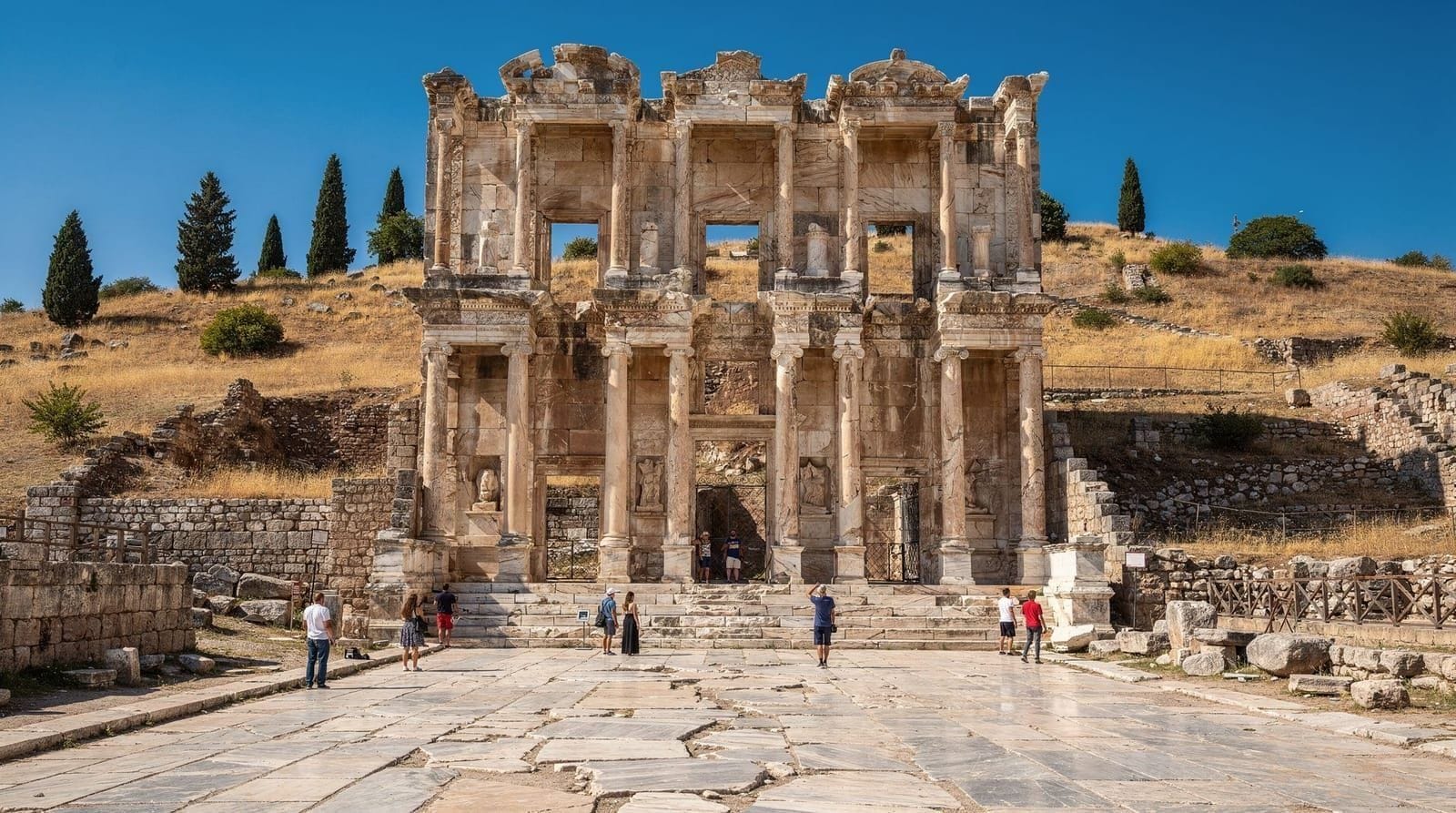
For the broader Ephesus area planning, see Ephesus visiting guide and Selçuk town guide.
Fitting Mary’s House into a wider Turkey trip
Most visitors reach this hillside as one stop in a longer journey rather than as a destination on its own. If you are starting from Istanbul, the Ephesus from Istanbul guide explains how the region fits into a trip that begins on the Bosphorus, and the day trip reality check is honest about what can and cannot be done in a single day. The blog’s day trips from Istanbul reality check covers the same ground in a lighter format.
Travellers who like a ready-made route can look at the Istanbul, Cappadocia, Ephesus and Pamukkale 7-day itinerary, which places the Ephesus area in sequence with the other highlights. For the next stop on that kind of route, the Pamukkale visiting guide and the Pamukkale destination page pick up where this page leaves off, while the Ephesus and Pamukkale trip tips add practical advice for linking the two.
Cruise passengers and anyone staying on the coast will find the Kuşadası guide useful for sorting out the base town before heading up the hill.
Behaviour at a place of worship
The dress and silence expected at the chapel are part of a wider set of habits that apply across Turkey. The mosque etiquette guide and the Turkish customs and etiquette guide give the broader picture, and much of that advice carries over naturally to a Christian pilgrimage site visited by people of several faiths.
Is it worth the extra time and cost?
For visitors with religious interest, the answer is straightforwardly yes — this is one of the few sites in Turkey where the pilgrimage atmosphere is tangible regardless of your own beliefs, and the votive wall alone justifies the detour. For visitors without a specific religious or historical interest, the calculation is closer: the taxi cost and the hour or so of time are noticeable additions to an Ephesus day that is already substantial on its own. The hillside setting and the views toward the Aegean are genuinely pleasant even for visitors who feel little connection to the religious content, which tips the balance toward visiting if your schedule allows it comfortably.
Frequently asked questions about House of the Virgin Mary
Is the House of the Virgin Mary a real historical site?
How do I get to the House of the Virgin Mary?
Can non-religious visitors enjoy the House of the Virgin Mary?
Is the House of the Virgin Mary worth visiting if I'm on a time-limited trip?
What is the best way to combine Ephesus and the House of the Virgin Mary?
What is the Votive Wall at Mary's House?
Top experiences
Bookable activities with verified prices and instant confirmation on GetYourGuide.