Istanbul ferries guide — crossing the Bosphorus by boat
Istanbul: Round-Trip Ferry Tickets to the Princes' Islands
How do ferries work in Istanbul and how do I use them?
Istanbul's city ferries (Şehir Hatları/IDO) run from terminals at Eminönü and Karaköy on the European side to Kadıköy and Üsküdar on the Asian side, plus the Princes' Islands and Bosphorus routes. Tap your Istanbulkart at the terminal gate to pay. Ferries run every 15-30 minutes on main routes during the day.
Why ferries matter in Istanbul
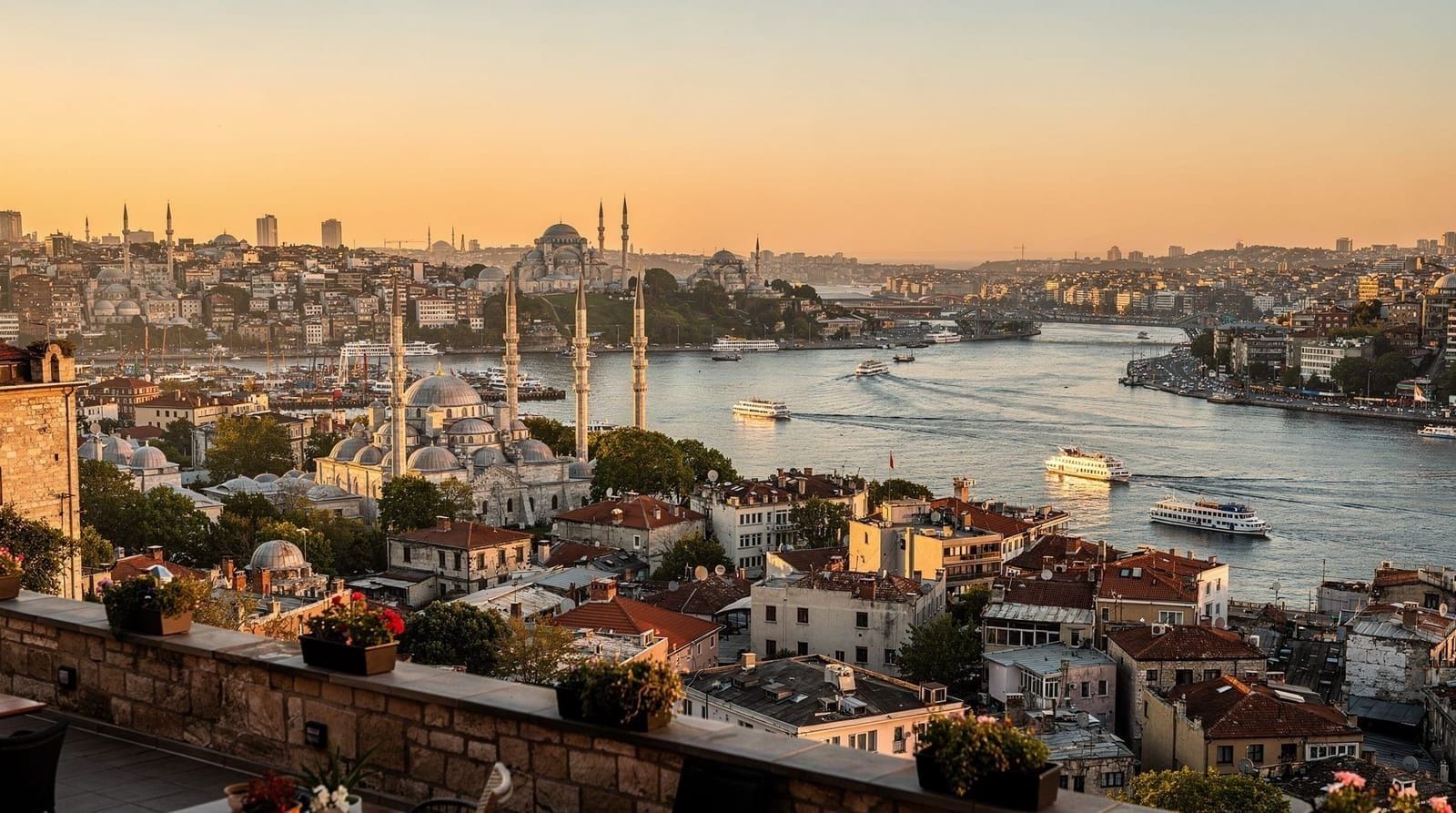
Istanbul is a city built on and around water. The Bosphorus strait separates Europe and Asia. The Golden Horn cuts into the European side, creating the historic peninsula of Sultanahmet on one side and the Beyoğlu district on the other. The Sea of Marmara lies to the south. Ferries have been the essential connective tissue of this city for centuries.
| Payment | Istanbulkart on Şehir Hatları/IDO boats; not accepted on private operators |
| Main crossing | Eminönü ↔ Kadıköy, ~25 min; fare on the Şehir Hatları website |
| Scenic route | Boğaz Hattı to Anadolu Kavağı, ~1h45 each way |
| Frequency | Every 15–30 min on main routes by day; reduced at night |
| Weather note | Some sailings cancelled in severe winter storms (Nov–Feb) |
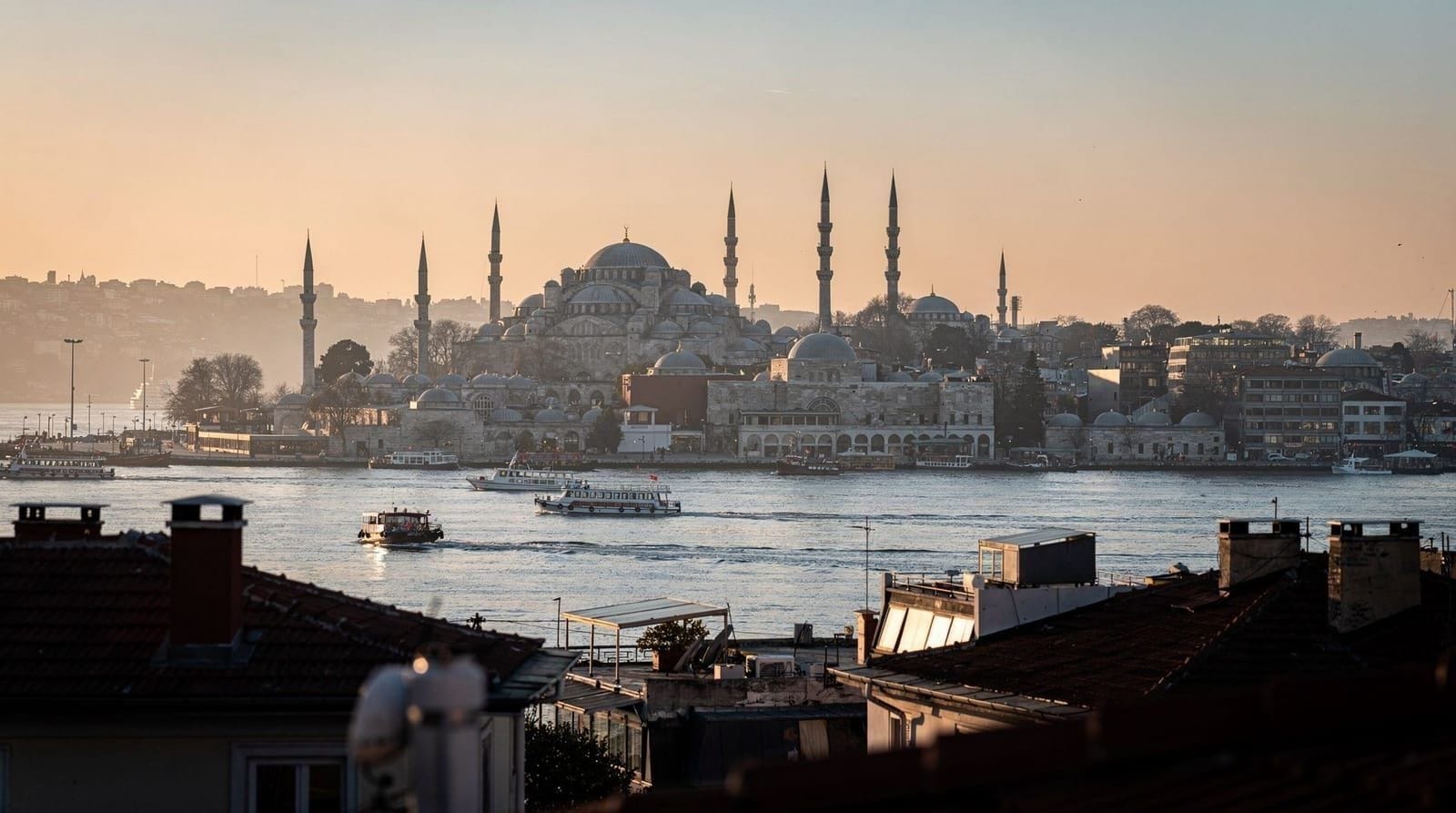
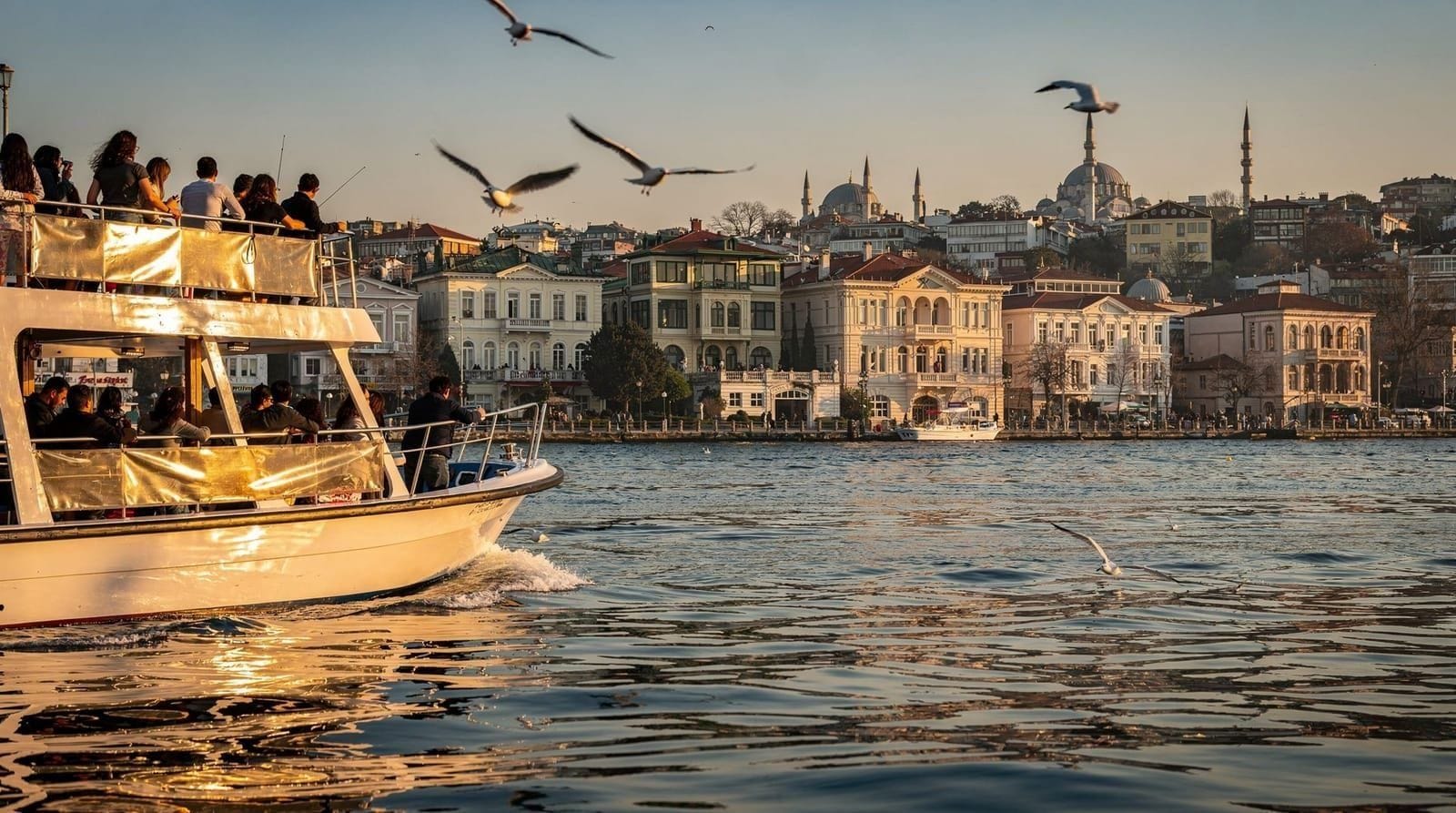
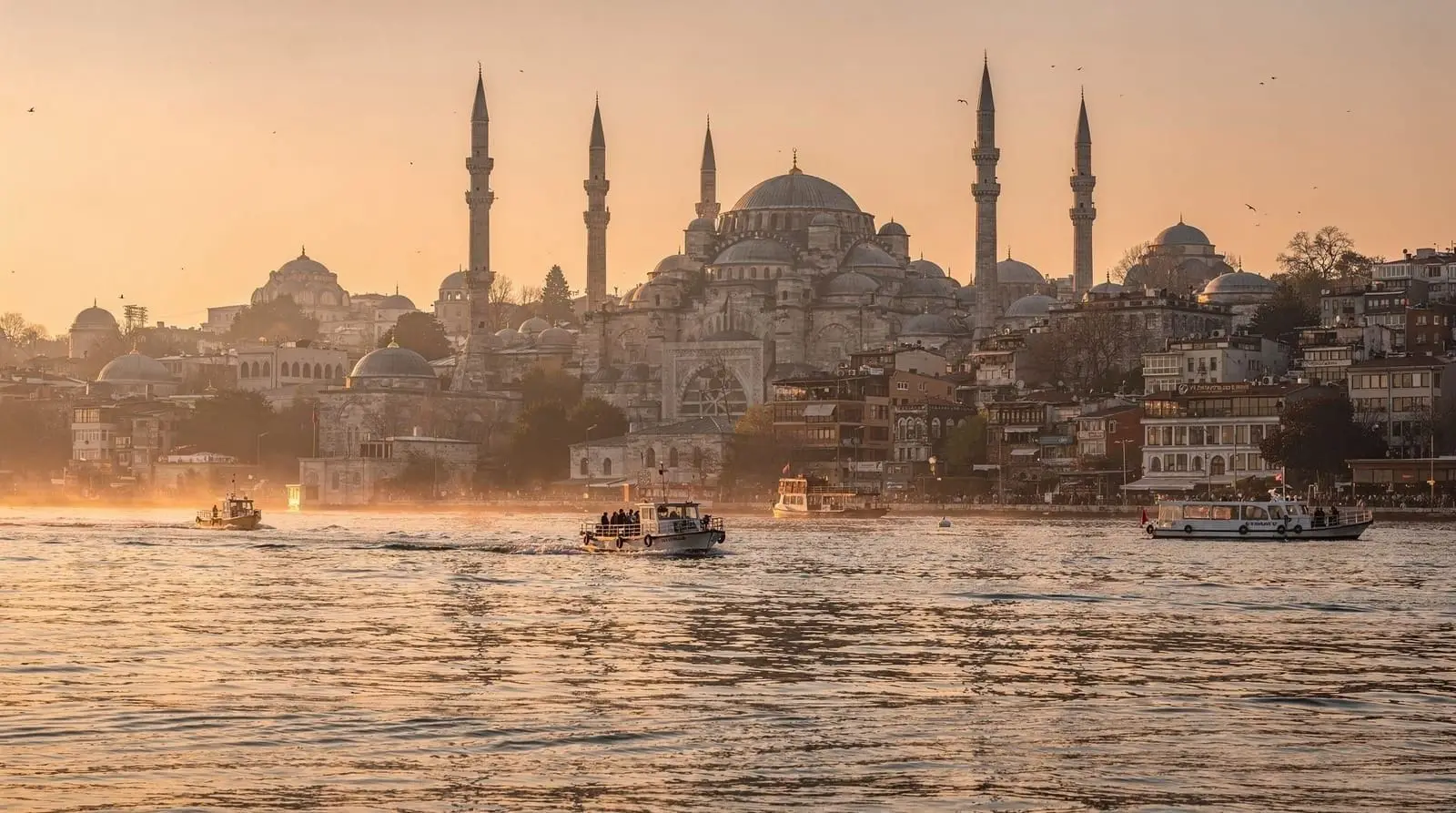
For visitors, ferries are not just transport — they are an experience. The 25-minute crossing from Eminönü to Kadıköy gives you a moving view of the Istanbul skyline, the minarets of the Blue Mosque and Hagia Sophia receding behind you, the Bosphorus Bridge framing ahead. It is one of the city’s pleasures, and it costs less than a cup of coffee. For the wider transit picture beyond ferries, see the getting around Istanbul guide and the Istanbulkart guide for how to load and use the card on every mode.
The main ferry routes for tourists
Eminönü / Karaköy → Kadıköy (main Asian-side crossing)
This is the most used tourist ferry route. From the Eminönü ferry terminal (next to the Galata Bridge, accessible from the T1 tram Eminönü stop) or from the adjacent Karaköy terminal, ferries run to Kadıköy on the Asian side approximately every 15-30 minutes during the day.
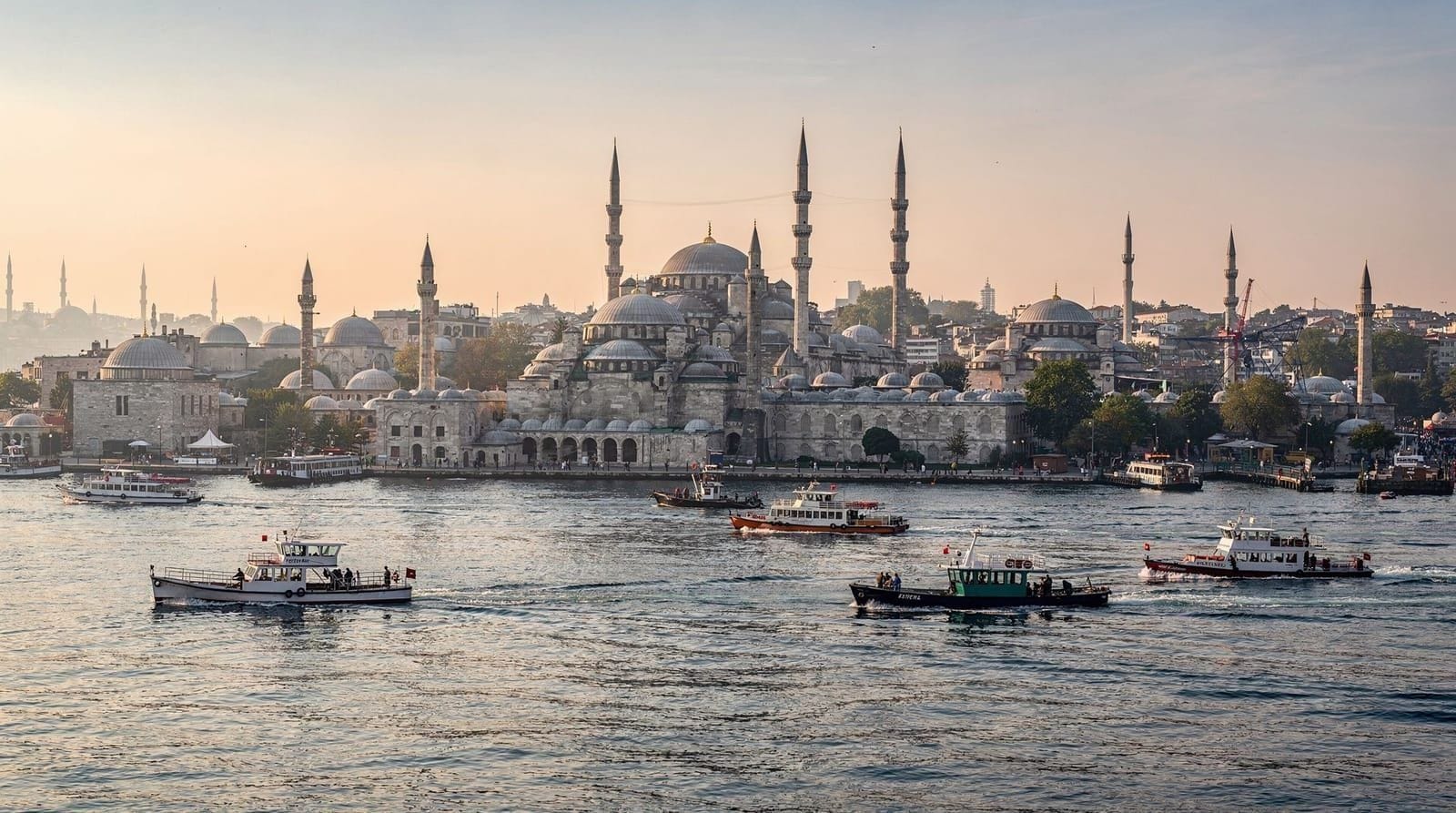
Journey time: approximately 25 minutes. Cost: paid with the Istanbulkart; check the current fare on the Şehir Hatları official website. What you see: The European historic skyline (Blue Mosque, Hagia Sophia domes, Galata Tower) from the water, the Bosphorus waterway, the Asian shore of Kadıköy.
At Kadıköy, you arrive at the main ferry terminal near the market and commercial area. Excellent for a morning or afternoon in the neighborhood: the Kadıköy market (pazar), Çiya Sofrası restaurant, street food. Return by the same ferry.
Eminönü / Karaköy → Üsküdar
Üsküdar is the more traditional Asian-side neighborhood, north of Kadıköy. Ferries from Eminönü and Karaköy run approximately every 15-20 minutes.
Journey time: approximately 15-20 minutes. What you see: Maiden’s Tower (Kız Kulesi / Leander’s Tower) close up on the crossing. Excellent views of the European waterfront.
From Üsküdar, you can see the Maiden’s Tower nearby, visit the Mihrimah Sultan Mosque (a Sinan work), and explore the more traditional neighborhood atmosphere of this Asian-side district.
The public Bosphorus ferry (Boğaz Hattı)
This is the scenic long-haul route — from Eminönü, the ferry runs the full length of the Bosphorus waterway, stopping at both European and Asian shore settlements, and terminating at Anadolu Kavağı, a small fishing village at the northern end of the Bosphorus strait where the Black Sea begins.
Departure frequency: Typically 1-2 sailings per day from Eminönü in each direction. Check the current Şehir Hatları (City Lines) schedule carefully before planning a day around this route.
Journey time: approximately 1 hour 45 minutes each way. Cost: check the current fare and schedule on the Şehir Hatları official website. What you see: Both shorelines of the Bosphorus, including the Dolmabahçe Palace waterfront, Çırağan Palace, the Bosphorus Bridge and the Fatih Sultan Mehmed Bridge, the fortresses (Rumeli Hisarı, Anadolu Hisarı), and the more rural northern Bosphorus landscape.
At Anadolu Kavağı, restaurants serve fresh fish. The castle (Yoros Kalesi) above the village is worth climbing for the view over the Black Sea mouth.
This route is the cheapest and most authentic way to see the Bosphorus. Commercial sightseeing cruises are 2-3 hours and cost 10-20x as much per seat, but offer more curated commentary and flexibility. See our Bosphorus by public ferry guide and best Bosphorus cruise guide for the comparison.
Princes’ Islands ferry
The Adalar (Princes’ Islands) are nine islands in the Sea of Marmara, the largest being Büyükada. They are a popular day trip and weekend escape from the city — car-free, quiet (transport is by bicycle or horse-drawn phaeton), and historically significant (the islands were a place of exile for Byzantine princes, Ottoman court officials, and the Ecumenical Patriarch).
Departure: Eminönü or Kabataş ferry terminals. Şehir Hatları runs the standard (slower) ferries; IDO runs “fast ferries” (vapur hızlı).
Journey time to Büyükada:
- Standard ferry: approximately 1h45-2h (with stops at closer islands)
- Fast ferry: approximately 50-65 minutes
Cost: check the current fares (standard and fast ferry) on the Şehir Hatları official website.
Schedule: Multiple daily sailings. Most tourists take an early-morning ferry and return in the late afternoon. Check the current schedule at the Eminönü terminal or Şehir Hatları website.
See our Princes’ Islands day trip guide for the full excursion plan.
Princes’ Islands round-trip ferry ticketUsing the Istanbulkart on ferries
At IDO/Şehir Hatları terminals, look for the Istanbulkart readers at the entrance to the waiting area or at the gangway. Tap the card and you are through. The fare is deducted automatically.
Not all boats use Istanbulkart: Private ferry companies (Dentur Avrasya, Turyol) have their own ticketing systems and do not accept the Istanbulkart. These companies run competing routes on some of the main crossings. Look for the city-operated Şehir Hatları boats (blue-and-white livery) for Istanbulkart use.
The ferry vs. Marmaray: which to use?
The Marmaray is the rail tunnel under the Bosphorus, opened in 2013. It connects Sirkeci station (European side, near Eminönü) to Üsküdar (Asian side) in approximately 4 minutes. Fast, cheap, uses Istanbulkart.
For commuters: The Marmaray is far faster. A 4-minute tunnel versus a 25-minute ferry.
For tourists: The ferry is the choice for the Bosphorus experience. The Marmaray gives you nothing to look at — you are underground. The ferry gives you the skyline, the water, the view. Use the Marmaray when you need speed; use the ferry when the crossing is part of the day.
Ferries for a genuine Kadıköy afternoon, not just a crossing
Rather than treating the Eminönü-Kadıköy ferry purely as transport to somewhere else, it’s worth building a half-day around the crossing itself plus time on the Asian side. A late-morning departure gives good light for the skyline photo on the way over, followed by a couple of hours in the Kadıköy neighbourhood — the covered market, a lokanta lunch away from tourist pricing, and a wander through Moda’s back streets — before an early-evening return crossing when the light on the water turns gold again. This out-and-back pattern turns a 25-minute transit leg into a genuinely worthwhile half-day, and it’s one of the cheapest structured outings available in the city.
The ferry terminal at Eminönü
The Eminönü ferry terminal is one of Istanbul’s great urban spaces — always busy, chaotic in a pleasant way, with fishermen on the Galata Bridge overhead, seagulls, tea vendors, and the smell of balık ekmek (fish sandwiches). The terminal handles multiple routes from adjacent jetties; look for signs to the specific destination (Kadıköy, Adalar/Princes’ Islands, Boğaz Hattı).
The terminal has a waiting area, a tea stand, and a small snack bar on the boats themselves. The balık ekmek boats moored at the Eminönü waterfront are a famous Istanbul street food stop — boats rock in the water while cooks grill fish inside.
Where a ferry fits in your itinerary
A crossing works best when it replaces a transfer you would make anyway. If you are staying in the old city, the Sultanahmet district is a short tram ride from the Eminönü jetties, so a ferry to the Asian side slots neatly into a day that also includes the Spice Bazaar next to the terminal. Those building a compact first visit will find the ferry fits well into the one-day Istanbul plan and the three-day itinerary.
On the Asian side, Üsküdar and Kadıköy reward an unhurried visit, and the Asian side guide helps you decide how to split your time between them. If you are still choosing where to base yourself, the European vs Asian side comparison explains how living near a ferry terminal changes your daily routine. Families will appreciate that a boat ride is an easy win with children, as covered in the Istanbul with kids guide.
For a longer read on the water itself, the Bosphorus destination page lists the landmarks you will pass, and the Ferry hopping on the Bosphorus blog post shares a more personal take on linking several crossings in one day.
Ferry schedules and current information
Ferry schedules change seasonally and with tide windows. For current schedules:
- Şehir Hatları website (sehirhatlari.istanbul): the official city ferry operator
- Istanbul Metropolitan Municipality app: includes transit schedules across all modes
- Ferry terminal information boards: departure times posted at each terminal
Ferries may be reduced or cancelled in rough weather (strong Bosphorus currents or storms). Check conditions if visiting in November-February.
The Golden Horn ferries (Haliç Hattı)
The Golden Horn is the estuary that cuts into the European side, separating the old city of Sultanahmet from Karaköy and Beyoğlu. Crossing the Golden Horn is usually done on foot via the Galata Bridge (a 5-10 minute walk), but ferry services also run along the Golden Horn from Eminönü to Balat (for the Fener and Balat neighborhoods) and Eyüp at the head of the inlet.
The Golden Horn ferry is practical for visiting:
- Balat and Fener: The historic minority community neighborhoods with the Ecumenical Patriarchate and colorful Ottoman houses. Dock near Balat and walk into the neighborhood — avoids the uphill walk from the lower streets.
- Eyüp: Istanbul’s most sacred mosque (Eyüp Sultan Mosque) is at the far end of the Golden Horn. The ferry is more pleasant than the bus for reaching it.
The Golden Horn ferry accepts the Istanbulkart. Journey from Eminönü to Balat takes approximately 15-20 minutes; to Eyüp approximately 30 minutes. This route runs less frequently than the main Bosphorus crossings, so it’s worth checking the schedule before building an afternoon around it — arriving to find an hour’s wait for the return leg can eat into time better spent exploring the neighbourhood itself.
See our Balat and Fener walking guide for what to explore once you arrive.
What to do on a Bosphorus ferry: practical notes
The public ferry crossings are utility transport for most Istanbul residents, but for visitors they are experiences in their own right. A few notes on making the most of them:
The tea vendor: On most Şehir Hatları ferries, a crew member walks through the passenger saloon selling tea (çay) in small glasses for 10-20 TRY. This is the classic way to drink tea while watching the Bosphorus. Accept one.
Outside seating: Most ferries have an outside rear deck. Even in cooler weather, spending at least part of the crossing on the deck gives you the clearest views and the wind-in-face experience of crossing the Bosphorus. The inside saloon is warm but views are through windows.
Photography: The Eminönü-Kadıköy crossing gives you the best European skyline shot from the water — Hagia Sophia, the Blue Mosque, Galata Tower, and the Bosphorus Bridge visible in the distance. Position yourself on the upper deck at the rear of the ferry as it leaves Eminönü. The light is best in morning and evening.
Commuter behavior: Istanbul’s commuter ferries are efficient and quick to load and unload. Stand near the gangway as you approach your destination. The boats dock briefly; disembark quickly.
Ferry timetables: where to find them
Ferry schedules change seasonally. The most reliable sources:
- Şehir Hatları official site (sehirhatlari.istanbul) — route maps, departure times, seasonal schedules for all city ferry routes including the Boğaz Hattı (full Bosphorus route)
- Istanbul Metropolitan Municipality app — integrated with other transport
- Physical boards at ferry terminals — departure times posted at Eminönü, Karaköy, Kadıköy, and Beşiktaş terminals
- Google Maps — includes Şehir Hatları ferry schedules in the transit routing
For the Princes’ Islands ferries specifically, verify the return schedule before you go — the last ferry from Büyükada typically departs in the early evening.
Public ferry vs paid Bosphorus cruise
Many first-time visitors assume they need a paid sightseeing cruise to see the Bosphorus properly. The public ferry does most of the same job for a fraction of the price, with a genuine trade-off in commentary and flexibility.
| Public ferry (Boğaz Hattı) | Paid sightseeing cruise | |
|---|---|---|
| Cost | Public fare, see the Şehir Hatları website | Considerably more per seat |
| Commentary | None | Live or audio guide, multiple languages |
| Schedule | Fixed, 1–2 sailings/day | Multiple daily departures, flexible |
| Duration | ~1h45 one way, can combine with a stop | Typically 2–3 hours round trip |
| Best for | Budget travellers, an authentic local experience | Time-limited visitors, sunset timing, live narration |
Neither is objectively better — a sunset paid cruise timed for golden hour delivers something the fixed-schedule public ferry can’t guarantee, while the public ferry gives a more genuine sense of how Istanbul residents actually use the water. See the best Bosphorus cruise guide for how to choose if you decide the paid option suits your schedule better. If sunset timing matters most, a guided Bosphorus sunset boat cruise is a straightforward way to book it.
Storm conditions and Bosphorus weather
The Bosphorus can be rough in winter, particularly November-February when storms come in from the Black Sea. City ferries are sturdier vessels and typically continue operating in moderate conditions, but some sailings are cancelled in severe weather. Check the IETT/Şehir Hatları website for service alerts if you are traveling in winter.
The full-length Bosphorus route (Boğaz Hattı) to Anadolu Kavağı is more susceptible to cancellation or modification in rough weather than the short Bosphorus crossing routes (Eminönü-Kadıköy, Eminönü-Üsküdar).
Which ferry terminal to use
Istanbul has several ferry terminals on the European side, and it helps to know which one serves your route:
Eminönü terminal: The main hub. Serves Kadıköy, Üsküdar, Princes’ Islands (Adalar), and the full Bosphorus route (Boğaz Hattı). Located at the north end of the T1 tram Eminönü stop, directly at the base of the Galata Bridge. This is the ferry terminal you will use most as a tourist.
Karaköy terminal: Adjacent to the Galata Bridge on the south bank. Serves some of the same routes as Eminönü (Kadıköy, Üsküdar) with different departure frequencies. Accessible from the T1 tram Karaköy stop.
Kabataş terminal: At the western end of the T1 tram line, near Beşiktaş. Also serves the Princes’ Islands and Bosphorus routes — the “fast ferry” (İDO express) to Büyükada departs from here. Accessible from the cable car F2 from Taksim.
Beşiktaş terminal: Adjacent to the Beşiktaş neighborhood waterfront. Serves Kadıköy and Üsküdar crossings and some Bosphorus tour boats.
For most tourist purposes: use Eminönü as your default ferry terminal. It is the most central and best-served terminal on the European side.
Frequently asked questions about Istanbul ferries guide — crossing the Bosphorus by boat
How much does a ferry cost in Istanbul?
How often do ferries run between Eminönü and Kadıköy?
What is the public Bosphorus ferry (the long route)?
Can I use the Istanbulkart on ferries?
Which is better for the Bosphorus — ferry or Marmaray?
How do I get to the Princes' Islands by ferry?
Are there ferries at night?
Top experiences
Bookable activities with verified prices and instant confirmation on GetYourGuide.