Göreme Open-Air Museum guide
Cappadocia: Goreme Open-Air Museum Tour
What is the Göreme Open-Air Museum?
A UNESCO World Heritage Site in Cappadocia containing Byzantine cave churches carved into volcanic rock and decorated with frescoes from the 10th-13th centuries. It is 1.5 km from Göreme village, takes 2-3 hours to visit properly, and is one of Turkey's most historically significant sites.
Why the Göreme Open-Air Museum matters
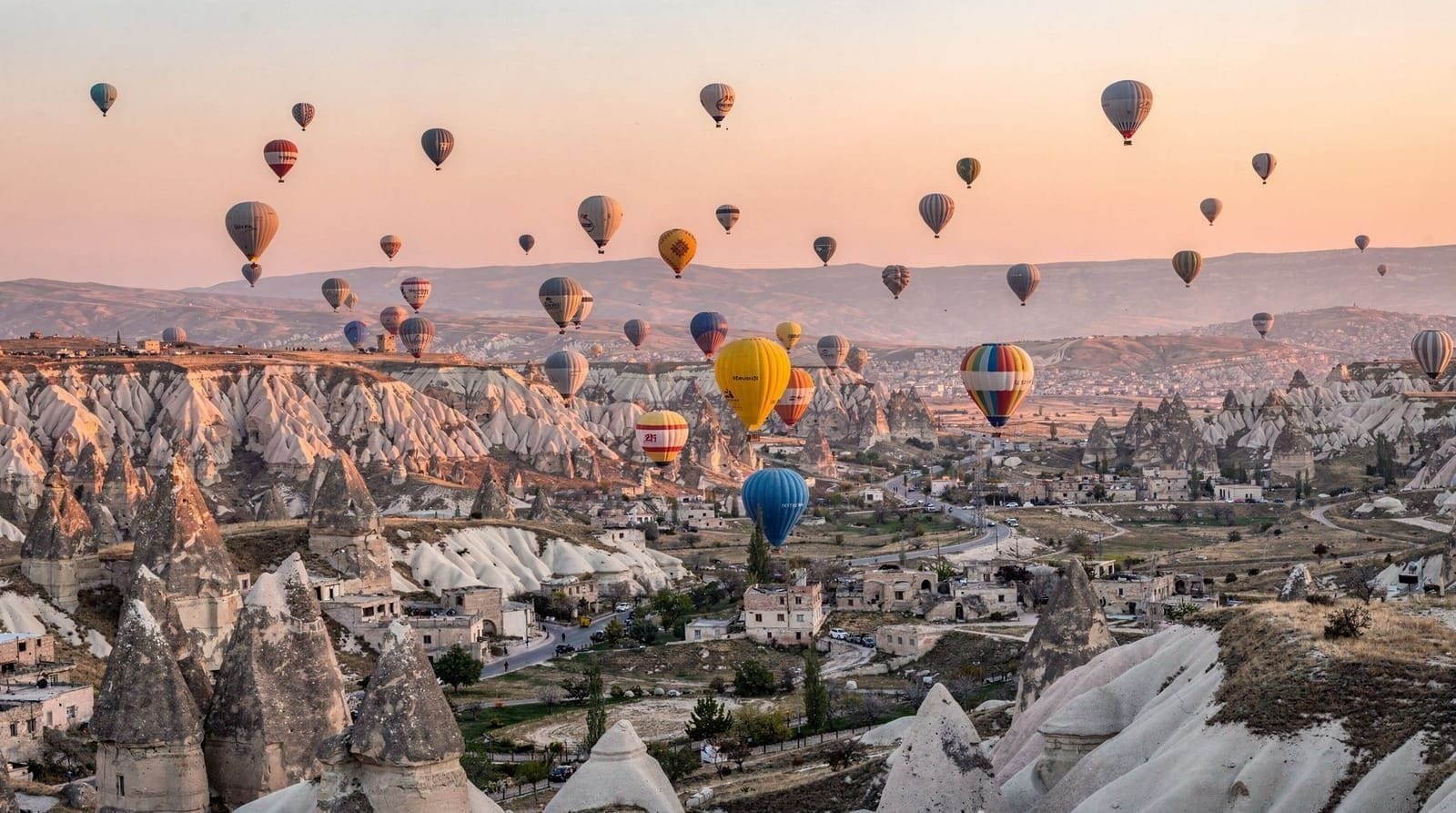
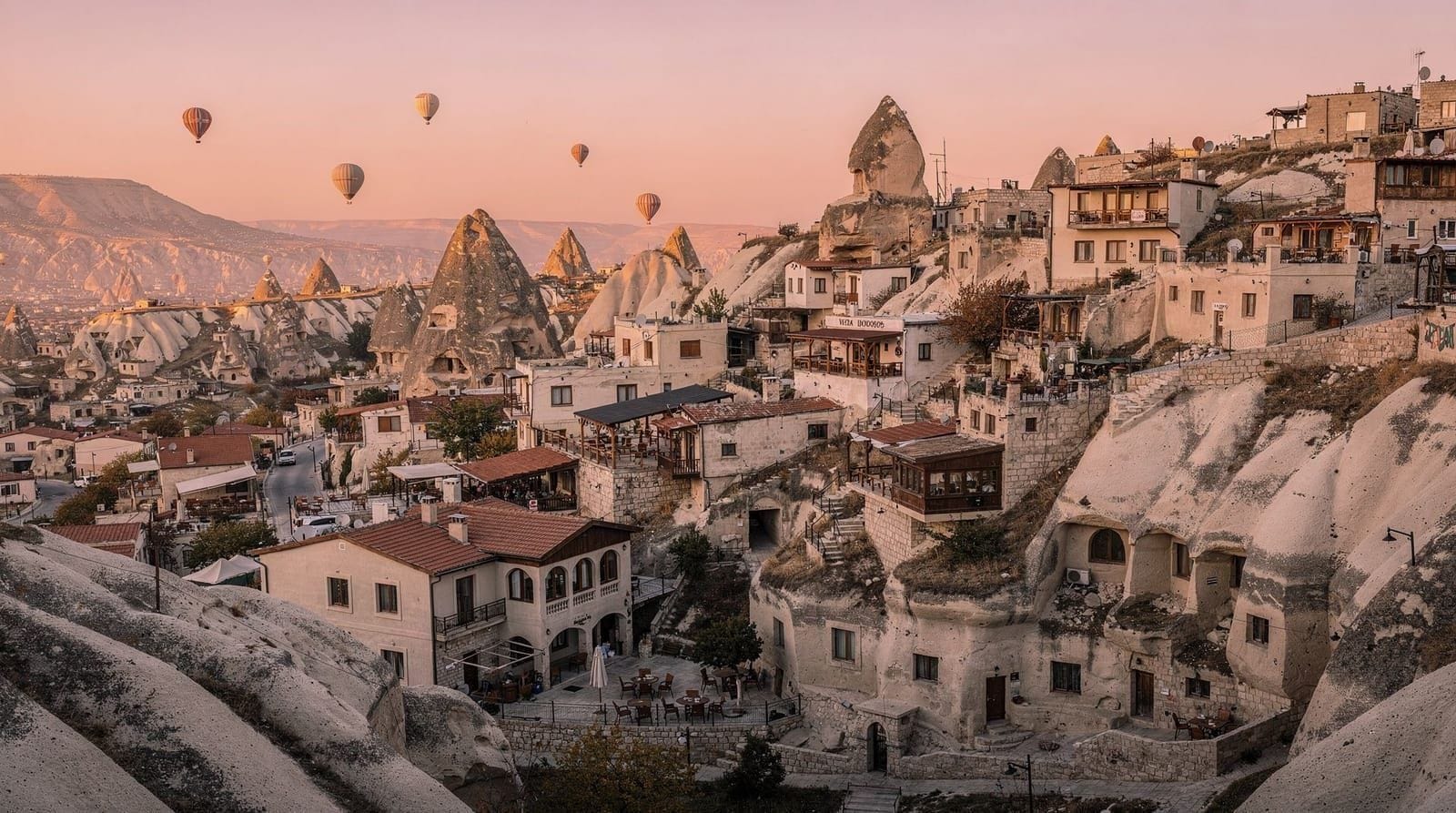
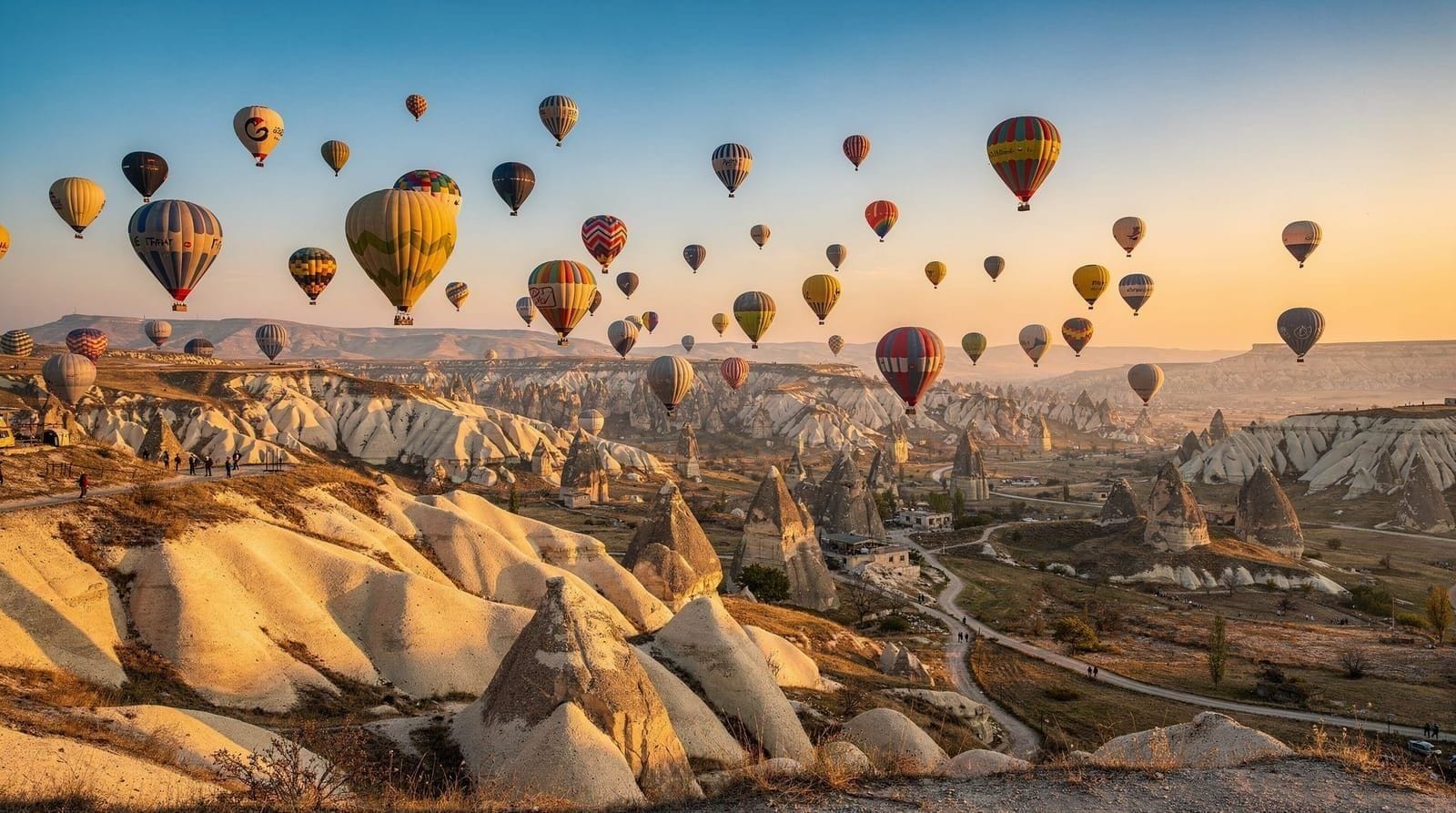
Cappadocia is famous for hot air balloons and fairy chimneys, but the Göreme Open-Air Museum is the site with the deepest historical significance. This is where early Christian monastic communities, seeking isolation in the volcanic landscape of central Anatolia, carved churches, monasteries, and refectories from the soft tuff rock — and decorated them with fresco cycles that are among the finest examples of Byzantine art outside Constantinople.
| Where | 1.5 km uphill from Göreme village, Cappadocia |
| Cost | around 300-400 TRY main complex, +100-200 TRY for the Dark Church |
| Time needed | 2-3 hours independent, 1-1.5 hours on a Red Tour stop |
| Getting there | 20-min walk uphill, or short taxi (~100-150 TRY) |
| Best time | early morning (8-10 am) or after 3 pm for lighter crowds |
The history of Christian communities in Cappadocia begins in the 4th century CE with the Cappadocian Fathers — Basil of Caesarea, Gregory of Nyssa, and Gregory of Nazianzus — who shaped early Christian theology and monastic practice. By the 9th-13th centuries, Cappadocia had hundreds of rock-cut religious sites.
The Göreme Open-Air Museum concentrates the most important of these in an area of approximately 1 square km. A UNESCO World Heritage Site since 1985, it is one of the few places in Turkey where pre-Ottoman Byzantine art is accessible to visitors at this scale.
The main churches
Tokali Kilise (Buckle Church)
The largest and arguably the most impressive church in the complex, though it sits slightly below the main museum compound and requires a brief detour (included in entry). The church has two phases: an older nave (early 10th century) and a new nave added later. The new nave’s barrel-vaulted ceiling is covered with a comprehensive fresco programme depicting scenes from the New Testament — the quality and completeness of these frescoes make Tokali a significant monument of Byzantine painting.
The lower portion of the walls (less protected from humidity) has suffered more deterioration, but the upper sections and the apse are well-preserved.
Karanlık Kilise (Dark Church)
The Dark Church is small and dark — its single tiny window let in almost no light over the centuries, protecting the frescoes from UV degradation. The result is some of the most vivid Byzantine colours anywhere in Turkey: deep blue lapis lazuli backgrounds, red ochre robes, gold. The iconographic programme is orthodox: Pantocrator in the dome, Deesis, Nativity, Entry into Jerusalem, Betrayal of Judas, Crucifixion, Anastasis (Descent into Hell).
The additional entry fee (approximately 100-200 TRY / 3-6 USD) is unambiguously worthwhile. Do not skip this.
Elmalı Kilise (Apple Church)
One of the more complete small churches in the complex, with frescoes in relatively good condition. The name may derive from a nearby apple orchard or from a ball in Christ’s hand depicted in a dome painting. The programme includes the Pantocrator, saints, and biblical scenes in a compact interior.
Yılanlı Kilise (Snake Church)
Named for a fresco of St. Onuphrius being tempted by a serpent (the serpent has been identified by some scholars as actually depicting a two-headed dragon). The church also contains depictions of Emperor Constantine and his mother Helena with the True Cross — an unusual inclusion in a monastic context.
Barbara Kilise (Saint Barbara Church)
Simple red-ochre paintings on white ground — decorative rather than representational in places. The geometric ornament and basic figural painting suggest a different artistic tradition or period from the more sophisticated painted churches. Named for a figure of Saint Barbara, the patron saint of artillerymen, in an apse fresco.
Çarıklı Kilise (Sandal Church)
Named for two footprint shapes carved into the floor near the entrance, believed to be connected to the belief that Christ left footprints before ascending to heaven. This church is one of the last decorated in the complex (late 11th century) and shows more refined Comnenian-style painting.
The Nuns’ Monastery and Monks’ Monastery
The large multi-storey rock-cut structures facing each other across the main valley of the museum were conventionally identified as a nuns’ monastery and monks’ monastery. The Nuns’ Monastery is a seven-storey complex with dining rooms, kitchens, and living quarters carved into the rock face.
These structures are viewed from the outside rather than entered (some have restricted access due to erosion). The scale — the monastery stands perhaps 20 metres high, entirely carved from the cliff — is impressive.
Visiting independently vs guided tour
Independent visit
The museum is 1.5 km from Göreme village centre — a 20-minute walk uphill on the main road. Taxis from Göreme are approximately 100-150 TRY (3-4 USD) for the short ride.
At the ticket office, audio guides are available for rent (ask at the counter — approximately 100-150 TRY). An audio guide significantly improves the independent visit by providing iconographic identification and historical context at each church.
An independent visit takes approximately 2-3 hours depending on pace.
Guided visit
The Cappadocia Göreme Open-Air Museum guided tour provides an expert guide specifically for the museum complex, which allows you to ask questions about the specific frescoes and the broader history of Byzantine monasticism. This is the recommended option for visitors with a historical or religious interest.
Most Red Tours include the museum as a stop. The time allocated on a Red Tour (typically 1-1.5 hours) is adequate for a general impression but not for a thorough examination.
Independent vs guided, at a glance
| Independent visit | Guided tour / Red Tour | |
|---|---|---|
| Pace | Self-directed, 2-3 hours | Fixed, often 1-1.5 hours |
| Context | Audio guide only, unless you research beforehand | Expert explains iconography and history |
| Cost | Entry fee only | Entry fee + tour price, but transport included |
| Best for | Independent travellers with time to spare | Visitors combining it with other Cappadocia sites in one day |
Practical information
Entry fees (2026 estimates)
- Main complex: approximately 300-400 TRY (8-11 USD)
- Karanlık Kilise (Dark Church): additional approximately 100-200 TRY (3-6 USD)
- Museum Pass Turkey: covers the main complex but verify whether the Dark Church supplement is included
Opening hours
Daily approximately 8 am to 7 pm (summer), 8 am to 5 pm (winter). Hours are subject to change — check current hours at the Göreme tourist information office or the museum website before your visit.
Best time to visit
- Morning (8-10 am): Lightest crowds, best photography conditions.
- Afternoon (after 3 pm): Crowds decrease as tour buses leave. Good light for the exterior rock formations.
- Avoid: 10 am-1 pm in summer, when guided tour groups overlap and the churches are congested.
Buying tickets and avoiding the queue
Tickets are sold at the entrance gate only — there is no need to book online in advance for an independent visit, though this can change seasonally, so check current guidance if travelling in peak season (April-June, September-October). The Museum Pass Turkey (sold at major sites nationwide) covers the main complex and can save time at the ticket window if you already hold one for other Cappadocia or national sites, but always verify at the gate whether the separate Dark Church supplement is included, as pass coverage has varied over time. If you are visiting as part of a Cappadocia tour, entry is typically pre-arranged and you bypass the ticket line entirely — one practical reason a guided half-day appeals in the busiest months.
How this fits with Istanbul’s Byzantine history
For visitors coming from Istanbul, the Göreme frescoes make a natural pair with the city’s own Byzantine monuments. Hagia Sophia’s mosaics and the Chora Church’s frescoes represent the imperial capital’s Byzantine art at its most monumental, while Göreme shows the same tradition adapted to a rural, monastic setting far from Constantinople. Seeing both gives a fuller picture of Byzantine visual culture across the empire — worth keeping in mind when planning an itinerary that includes both Istanbul and Cappadocia.
Most travellers on a wider Turkey trip fly or take an overnight bus between the two regions rather than driving; the flight from Istanbul takes about 1.5 hours, and Göreme itself has no airport, so onward transfer from Kayseri or Nevşehir airport adds another 45-75 minutes. Building in the museum as a first or second stop after arrival, before balloon flights or the underground cities, spreads the historical sightseeing across a calmer first day rather than cramming everything into one packed itinerary. If you want to add a flight on the same trip, a sunrise hot air balloon flight over Göreme pairs well with a museum visit later that day.
What to bring
- Modest clothing for the churches (this is a religious site — shoulders and knees covered)
- Camera or phone, but check photography restrictions at each church entrance
- Comfortable walking shoes (some paths are uneven stone)
- Water (limited facilities inside the complex)
The broader context: Byzantine Christianity in Cappadocia
The Göreme Open-Air Museum is the most accessible entry point into a much larger landscape of rock-cut Christian sites in Cappadocia. Within a 30 km radius, there are estimated to be over 3,000 carved rock churches and chapels. Most are unexcavated, inaccessible, or in poor repair. The Göreme museum preserves perhaps two dozen of the most significant.
For visitors wanting to go deeper: the Ihlara Valley (covered in the Green Tour) has additional rock-cut churches along the river walk. The Peristrema Monastery (in the Ihlara area) and the Soğanlı Valley (50 km south of Göreme) have cave churches with different iconographic traditions. Specialist guides can arrange visits to less-touristed sites, including the Cappadocia underground cities that many visitors combine with a museum morning.
See Cappadocia tours guide for tour options covering these broader sites, and the Cappadocia from Istanbul guide if you are planning the trip out from the coast.
Byzantine iconography: a quick primer for non-specialists
Walking through the Göreme cave churches is significantly more rewarding with a basic understanding of Byzantine icon painting conventions. The fresco programmes follow a theological logic, not a random decorative one.
The Pantocrator: Almost every church has a Pantocrator (“Ruler of All”) in the apex of the dome — Christ in a frontal position, right hand raised in blessing, left hand holding a book (the Gospels). This is the cosmic Christ, the ruler of the universe, placed at the highest point of the church (the dome representing heaven).
The Deesis: A prayer scene showing Christ flanked by the Virgin Mary (left) and John the Baptist (right), who intercede on behalf of humanity. Often placed in the apse.
The Anastasis (Harrowing of Hell): The resurrection scene in Eastern Orthodox iconography. Christ descends to Hades and pulls up Adam and Eve from their coffins, trampling on the gates of Hell. Visually dramatic. Present in several Göreme churches.
The Virgin Orant: Mary with arms raised in the position of prayer (orant posture). Frequently in the apse.
Saints in rows: Along the walls and in the lower registers, rows of saints standing frontal — military saints, deacons, bishops, hermits. Many are identified by inscription.
This vocabulary, once recognised, turns what might look like “old paintings” into a systematic theological statement. A good guide or audio guide will point out these elements specifically.
Conservation and tourism tension
The Göreme Open-Air Museum faces a genuine conservation challenge: the frescoes are vulnerable to humidity and carbon dioxide from visitor breathing, and to physical damage from tourist proximity. The number of visitors has increased dramatically in recent years.
Measures taken include:
- Restricted visitor numbers at certain churches (you may occasionally find a church temporarily closed)
- Photography restrictions (flash photography is genuinely harmful to fresco pigments)
- Improved ventilation and monitoring in key churches
- Ongoing conservation work with international expertise
As a visitor, you can contribute to conservation by respecting photography restrictions, not touching any painted surface, and reporting any suspicious damage or graffiti to site staff immediately.
The Nuns’ Monastery — what we know and don’t know
The large seven-storey rock-cut structure conventionally called the “Nuns’ Monastery” (Rahibeler Manastırı) was identified as such by early Ottoman-era accounts and later European travellers. Modern scholars are less certain about the identification. The absence of documentary evidence specifically connecting the structure to a women’s monastic community, and the architectural similarities to the “Monks’ Monastery” across the valley, suggest both labels are traditional rather than confirmed.
What is certain is that the structure was a significant multi-use monastic complex — dining rooms (refectories), sleeping quarters, storage areas, and chapels are identifiable from the excavation. The scale of construction (the building stands approximately 5-6 storeys above the current ground level, with additional floors below) required substantial community effort.
The building is viewed from exterior paths — interior access is restricted for conservation reasons.
After the museum: what’s nearby
Tokali Kilise (Buckle Church): This church is technically part of the museum complex but sits approximately 50 metres below the main entrance, requiring a separate detour. Do not miss it — it contains one of the most complete fresco programmes in Cappadocia, and many visitors accidentally skip it by following the main museum circuit without doubling back.
Rose Valley trailhead: From the museum parking area, the Rose Valley trail (Güllüdere Vadisi) begins. After visiting the museum, a 1-2 hour hike into the valley covers additional rock-cut churches (some with visible frescoes) in a wilder, less managed setting.
Çavuşin village: 3 km north of the museum, the old cliff-side village of Çavuşin has a large cave church (St. John the Baptist) in the cliff face and the abandoned houses of the former village — a different register of Cappadocian history from the well-maintained museum.
For other Cappadocia sites: Things to do in Cappadocia. If you are deciding when to come, check the Cappadocia best time to visit guide, and for where to base yourself, see Cappadocia where to stay — most visitors sleep in Göreme itself, a short walk from the museum gate.
Frequently asked questions about Göreme Open-Air Museum
How much does the Göreme Open-Air Museum cost?
What are the opening hours of Göreme Open-Air Museum?
What is the Dark Church (Karanlık Kilise)?
How do I get to Göreme Open-Air Museum from Göreme village?
Do I need a guide at the Göreme Open-Air Museum?
Can I photograph inside the cave churches?
Top experiences
Bookable activities with verified prices and instant confirmation on GetYourGuide.