Pamukkale from Istanbul guide
From Istanbul: Guided Pamukkale Tour with Flight and Lunch
How do I get from Istanbul to Pamukkale?
Fly Istanbul to Denizli (DNZ) airport, approximately 1 hour 15 minutes, then a 45-minute transfer to Pamukkale village. Day tours by plane exist but are exhausting. One night in Pamukkale village lets you see the terraces at sunrise before the crowds arrive.
Pamukkale: the white terraces of Turkey
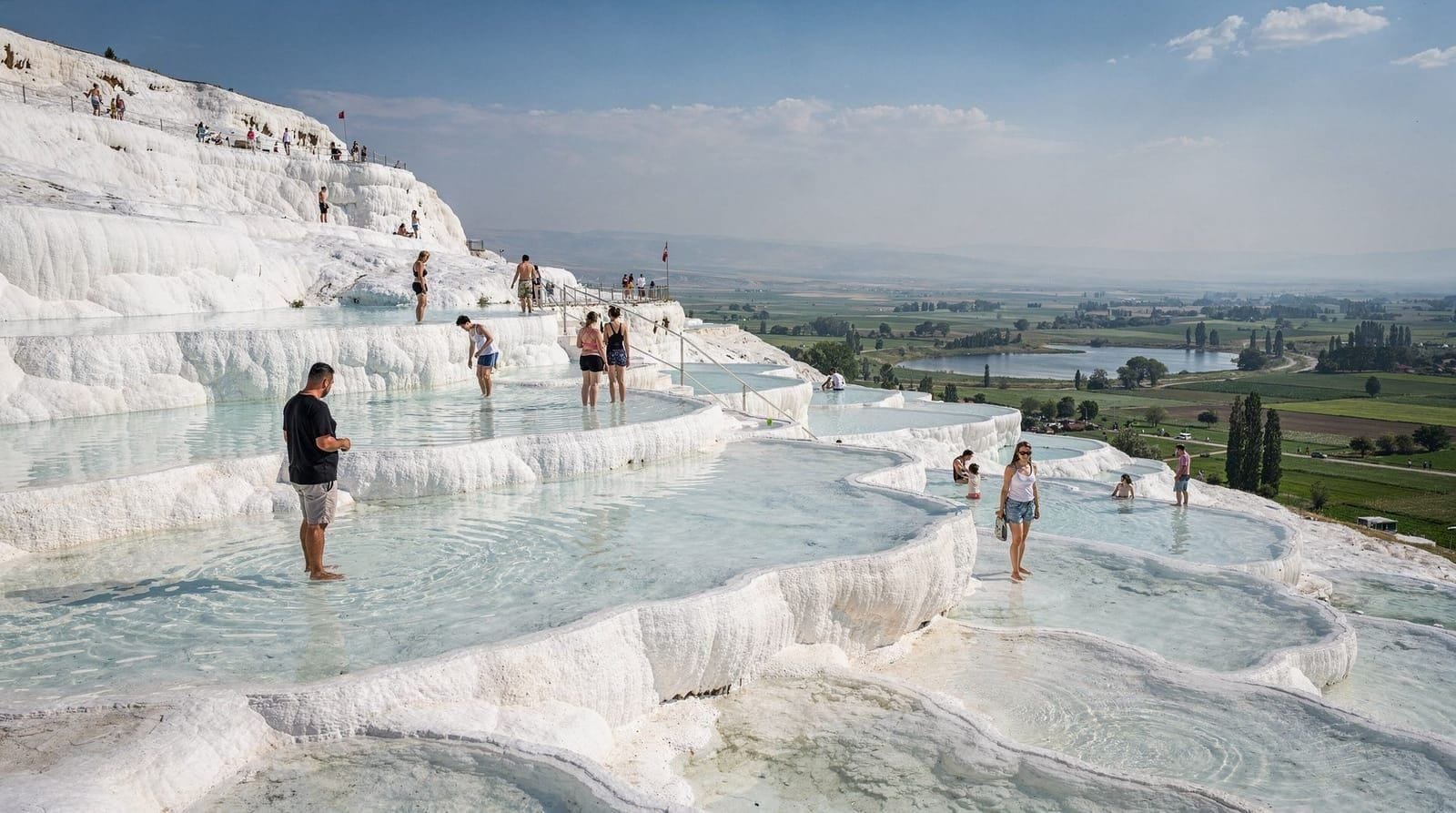
Pamukkale (“Cotton Castle” in Turkish) is one of the world’s most visually striking natural phenomena: white calcium travertine terraces cascading down a hillside, formed over millennia as mineral-rich thermal water has flowed over the edge and deposited calcium carbonate in pools and frozen waterfalls. From a distance, the hillside looks as though it is covered in snow or cotton.
Directly on top of the terraces sits Hierapolis, a Greco-Roman spa city founded around 190 BCE. The combination of a natural UNESCO World Heritage Site and a substantial ancient city makes Pamukkale one of Turkey’s most complete single-day experiences — if you have the time to do it properly.
From Istanbul, the logistics require a flight and at minimum one overnight to see the site without rushing. This guide covers both the one-day flight tour option and the recommended overnight approach.
| Where | Denizli province, ~400 km southeast of Istanbul |
| Cost | Flight + entry ~4,000–7,000 TRY round trip per person |
| Time needed | Minimum 1 overnight; a day tour is possible but rushed |
| Getting there | Fly IST/SAW to Denizli (DNZ), ~1hr15, then 45-min transfer |
| Best time | April–May or September–October |
Day tour or overnight — which should you choose?
This is the central decision for anyone planning Pamukkale from Istanbul, and the honest answer depends on what else is on your itinerary.
Choose the day tour if: your trip to Turkey is under a week, Pamukkale is a “nice to have” rather than a priority, or you specifically cannot add a hotel night to your schedule. It works — thousands of visitors do exactly this every year — but you’ll see the terraces at their most crowded, midday hours and miss the sunrise experience that makes Pamukkale memorable rather than merely impressive.
Choose the overnight if: Pamukkale is a genuine priority, you’re combining it with Ephesus, or you simply prefer not to spend 16+ hours door-to-door for a same-day round trip. The additional cost — one night’s guesthouse stay, typically 1,200–3,500 TRY — is modest against the improvement in experience.
For most travellers with more than five days in Turkey, the overnight is the better trade.
Getting from Istanbul to Pamukkale
By plane to Denizli (DNZ)
The most practical route is a flight from Istanbul (IST or SAW) to Denizli Çardak Airport (DNZ). Flight time: approximately 1 hour 15 minutes. Turkish Airlines, Pegasus, and AnadoluJet serve this route, though with fewer daily departures than the İzmir route — check schedules carefully.
From Denizli airport to Pamukkale village: approximately 45-60 minutes by shuttle or taxi. Shuttles typically coincide with flight arrivals and cost approximately 150-250 TRY (4-7 USD) per person. Taxi from the airport: approximately 400-600 TRY (11-17 USD).
Alternatively, some visitors fly into İzmir (ADB) and travel to Pamukkale by bus — a 2.5-3 hour journey via the Büyük Menderes valley. This works well if combining with Ephesus.
Day tours from Istanbul by plane
Guided Pamukkale day trip with flight from Istanbul is a legitimate option if your schedule is fixed. The typical itinerary includes:
- Early morning flight from Istanbul to Denizli
- Transfer to Pamukkale
- Guided tour of terraces and Hierapolis (approximately 4-5 hours)
- Lunch
- Return transfer to Denizli airport
- Evening flight back to Istanbul
This is a long day (typically 5 am to 10 pm) with approximately 4-5 hours on site. It covers the main features adequately. What you miss: the sunrise terraces before crowds arrive, the Antique Pool experience, and a relaxed dinner in the village.
What to see at Pamukkale and Hierapolis
The calcium terraces
The terraces are the main attraction. Walk barefoot (shoes must be removed at the entry point — bags provided for them) on the white calcium formations. Water pools in some terraces year-round, though the levels vary seasonally; peak spring flow creates the most photogenic conditions.
The main walkable route descends from the Hierapolis plateau through the active terrace area to the lower entrance near Pamukkale village. The path is approximately 1.5 km. It involves some steep sections and the wet calcium can be slippery — take care.
A designated swimming area at the base allows visitors to wade in the shallow pools. This is separate from the Antique Pool.
Hierapolis — the ancient spa city
The ruins of Hierapolis spread across the plateau above the terraces. The city was founded by the Seleucid king Eumenes II of Pergamon and later became a major Roman resort town, with the thermal waters used for medicinal bathing. The Apostle Philip was martyred here in 80 CE, and Hierapolis became an important early Christian centre.
Key sites within Hierapolis:
The Necropolis: The largest Roman-era cemetery in Anatolia, stretching for over 2 km along the road entering the city. Tumuli, sarcophagi, house tombs, and more elaborate mausolea sit in various states of preservation. Walking through it is genuinely atmospheric.
Roman Theatre: One of the best-preserved Roman theatres in Turkey, seating approximately 15,000. The stage backdrop (scaenae frons) is largely intact with relief carvings.
Frontinus Gate: The main triumphal gate of the city, triple-arched and well-preserved.
Temple of Apollo: Near the Plutonium — a crevice in the earth through which carbon dioxide gas emerges. In ancient times, priests would lower animals into the Plutonium to demonstrate divine protection (the CO2 is lethal to small animals). The gas is still present; the site is fenced for safety.
Hierapolis Archaeology Museum: Inside the old Roman baths, the museum has a good collection of sculpture and artefacts from the Hierapolis excavations. Allow 45-60 minutes.
The Antique Pool (Kleopatra’s Pool)
The Antique Pool is a thermal swimming pool at Hierapolis where you swim among submerged original Roman columns — architectural debris from an ancient earthquake that fell into the thermal springs. The water is warm (approximately 36 degrees) and mildly fizzy. Swimming here alongside chunks of 2,000-year-old marble is an experience unlike almost anything else in Turkey.
Entry approximately 400-600 TRY (11-17 USD). There is a changing room and towel hire available. The pool is open daily. During peak hours (11 am-3 pm) it is crowded; early morning or late afternoon is better.
Sunrise at Pamukkale — why overnight matters
The single most valuable thing you can do to improve your Pamukkale experience is arrive the night before and walk onto the terraces at sunrise.
At 6-7 am, the terraces are empty. The white calcium glows in the early light. Hierapolis above is quiet. The Antique Pool is available before the crowds arrive. The entire experience is transformed compared to midday, when tour buses from Kuşadası, Alanya, and Istanbul have deposited hundreds of visitors onto the terraces simultaneously.
Staying overnight in Pamukkale village costs approximately 1,200-3,500 TRY per night (33-97 USD) for a decent guesthouse. Many hotels have their own rooftop pools heated by the thermal waters. The village itself is small and quiet — a complete contrast to the chaos of peak hours at the terraces.
Pamukkale hot air balloon
A small number of companies now offer hot air balloon flights over Pamukkale — you can see the white terraces from above, which offers a completely different perspective. The flight season and conditions are similar to Cappadocia but less established as a tourism product. Balloon flights here are rarer and may have higher cancellation rates.
See Pamukkale visiting guide for current balloon operator details. The Pamukkale hot air balloon flight is the main option currently available.
Combining Pamukkale with Ephesus
The classic Aegean combination: fly to İzmir, spend a day at Ephesus (staying overnight in Selçuk), then take the bus eastward to Pamukkale (approximately 3 hours via Aydın), stay one night in the village, and fly home from Denizli or return to İzmir by bus.
This two-night, two-site itinerary is the most efficient way to see both sites from Istanbul. Full logistics and suggested routing: Ephesus and Pamukkale together.
For the comprehensive 7-day Turkey circuit: Istanbul, Cappadocia, Ephesus, and Pamukkale in 7 days.
Practical information
Entry fees (2026 estimates)
- Pamukkale terraces + Hierapolis: combined ticket approximately 600-800 TRY (17-22 USD)
- Hierapolis Archaeology Museum: included in combined ticket or approximately 200 TRY separately
- Antique Pool (Kleopatra’s Pool): approximately 400-600 TRY (11-17 USD) separate entry
Opening hours
Pamukkale terraces: open daily from dawn to dusk (approximately 6 am to 9 pm in summer, 8 am to 5 pm in winter). The ticket office is open from 8 am.
What to wear and bring
- No footwear on the terraces — plastic bags are provided for shoes
- Swimwear if you want the Antique Pool
- Sun protection — the white terraces reflect significant heat in summer
- Water (bring from the village — no water points on the terraces themselves)
When to visit
- April-May and September-October: ideal. Thermal water levels are good, weather is comfortable, crowds manageable.
- June-August: very hot. Midday temperatures can reach 35-40°C on the open terraces. Arrive early.
- November-March: cooler and quiet. Some guesthouses in Pamukkale village close in deepest winter. The terraces are open but water levels may be lower.
What to budget for a Pamukkale trip from Istanbul
A realistic per-person budget for two nights (one night Selçuk, one night Pamukkale), for a couple sharing accommodation:
| Item | TRY | Approx. USD |
|---|---|---|
| Return flights Istanbul-İzmir | 1,500-4,500 | 42-125 |
| Or: Denizli flight | +700-2,000 | +19-55 |
| Selçuk accommodation (1 night) | 1,500-3,000 | 42-83 |
| Pamukkale accommodation (1 night) | 1,500-3,000 | 42-83 |
| Ephesus entry + Terrace Houses | 900-1,200 | 25-33 |
| Pamukkale + Hierapolis combined entry | 600-800 | 17-22 |
| Antique Pool | 400-600 | 11-17 |
| Taxis and local buses | 1,000-2,500 | 28-70 |
| Meals (4-6 meals) | 1,500-3,500 | 42-97 |
| Total (per person) | ~10,000-21,000 | ~278-583 |
This is for independent travellers. Package tours (flight-inclusive from Istanbul) will price differently but handle all logistics.
Comparing this to the same-day flight tour option: a fully guided day trip typically runs 8,000–14,000 TRY per person including flights, transfers, guide, entry, and lunch — often cheaper in raw terms than the independent overnight budget above once you factor in accommodation for two nights, but you lose the sunrise terraces, the Antique Pool at a relaxed pace, and the flexibility to linger. Whether the savings are worth the trade-off depends entirely on how much Pamukkale matters relative to the rest of your itinerary.
Night train and bus options
For budget travellers or those who prefer not to fly, Turkey’s intercity bus network provides an alternative:
Istanbul to Denizli (direct): Buses from Istanbul Esenler Otogar. Journey approximately 7-8 hours. Overnight buses depart around 9-10 pm and arrive in the early morning. Cost approximately 400-700 TRY (11-20 USD) one way. Several operators: Metro Turizm, Kamil Koç, Pamukkale Turizm.
From Denizli otogar, dolmuş run to Pamukkale village (approximately 20 minutes, approximately 50 TRY / 1-2 USD).
The overnight bus from Istanbul to Denizli is a reasonable option if budget is the priority. You arrive tired, but accommodation in Pamukkale village is comfortable and inexpensive. Turkish intercity buses are generally well-maintained, air-conditioned, and have on-board refreshment service.
Istanbul to Selçuk (for Ephesus first): Similar overnight bus options, arriving İzmir area in the morning. Change for Selçuk at İzmir Otogar. Total approximately 9-11 hours.
Weather and seasonal conditions at the terraces
The Pamukkale calcium terraces require active thermal water flow to maintain their white colour and the pooling water. Flow varies seasonally:
Maximum flow: Spring (March-May) when snowmelt from the Honaz Mountain feeds additional water into the thermal springs. This is when the terraces are at their most vivid white with the most water pooling.
Summer (June-August): Still excellent. Good water flow, warm temperatures (sometimes too warm at midday for comfortable walking). The terraces are lit at night in summer — an additional reason to stay overnight.
Autumn (September-October): Good conditions. The plateau above begins to feel autumnal. Morning mist can enhance the Hierapolis atmosphere.
Winter (November-February): The terraces are open but the calcium can appear less vivid in winter light. The village is very quiet, accommodation is cheap. The Antique Pool (at 36°C year-round) is particularly pleasant when the air is cold.
Pamukkale village: what to know
The village of Pamukkale sits at the base of the terraces and has been transformed by tourism over the past 40 years. The old village is largely gone, replaced by a strip of guesthouses, restaurants, and tour agencies along the main road.
What remains: the basic infrastructure of comfortable budget accommodation, reasonable restaurants, and the genuine friendliness of Turkish village hospitality. Several guesthouses have rooftop pools or private thermal baths supplied by the same geological spring system as the famous terraces. These are very warm (35-36°C) and completely uncrowded — one of the best value experiences on the Turkey tourist circuit.
Ask specifically when booking whether your guesthouse has a thermal pool. It is not universal, but many do.
Packing specifically for a Pamukkale overnight from Istanbul
If you’re flying in from Istanbul for one night, pack light but deliberately, since the terraces and travel days have specific requirements beyond a standard city-break bag:
- Swimwear and a quick-dry towel: for the Antique Pool and any guesthouse thermal pool — pack these near the top of your bag, not buried, since you’ll likely use them the evening you arrive.
- Shoes you don’t mind getting wet: you’ll remove them entirely for the terrace walk, but the approach paths and village streets benefit from comfortable, easily-removable footwear.
- A light layer for the flight and evening: Denizli sits at higher altitude than Istanbul, and evenings can be cooler than the daytime terrace heat suggests.
- Cash in small denominations: village guesthouses and smaller restaurants are not always set up for card payments, and the shuttle from the airport is often cash-only.
- A printed or downloaded copy of your flight and transfer confirmation: mobile signal at the terraces themselves can be patchy, and having offline confirmation avoids last-minute stress at the airport.
For broader day trip planning from Istanbul: Best day trips from Istanbul and the combined Ephesus-Pamukkale guide at Ephesus and Pamukkale together.
Where Pamukkale fits in a wider Turkey trip
Pamukkale rarely stands alone. Most visitors build it into a longer route, and the right companions depend on how much time you have and what you want from the trip.
If you want the ruins that go with the terraces, the Hierapolis guide goes deeper into the Necropolis, the theatre and the museum than the summary above. The destination page for Pamukkale gives the wider picture of the area.
If the Aegean coast appeals, Ephesus from Istanbul covers the other big ancient site on this side of the country, and the Ephesus destination page sets out what else is nearby. The Selçuk town guide is useful for the night you spend near Ephesus, and the Kuşadası guide is worth a look if you prefer a seaside base.
If you would rather pair the terraces with the fairy chimneys, the Cappadocia from Istanbul guide explains how that trip works, and the five-day Istanbul and Cappadocia itinerary shows one way to structure it. For a longer circuit, the Turkey highlights in 10 days itinerary leaves room for more than one overnight.
Before you commit, it helps to read the day trip reality check, which explains plainly which excursions from Istanbul are genuine day trips and which are not. The blog post on Ephesus and Pamukkale trip tips adds practical advice for the combined route, and the Istanbul airports guide will help you choose between IST and SAW for your departure flight.
Frequently asked questions about Pamukkale from Istanbul
What makes Pamukkale special?
Can you swim in the Pamukkale terraces?
How long does it take to walk the Pamukkale terraces?
Is Hierapolis worth visiting with Pamukkale?
What time should I arrive at Pamukkale?
Can I combine Pamukkale and Ephesus in the same trip?
Top experiences
Bookable activities with verified prices and instant confirmation on GetYourGuide.