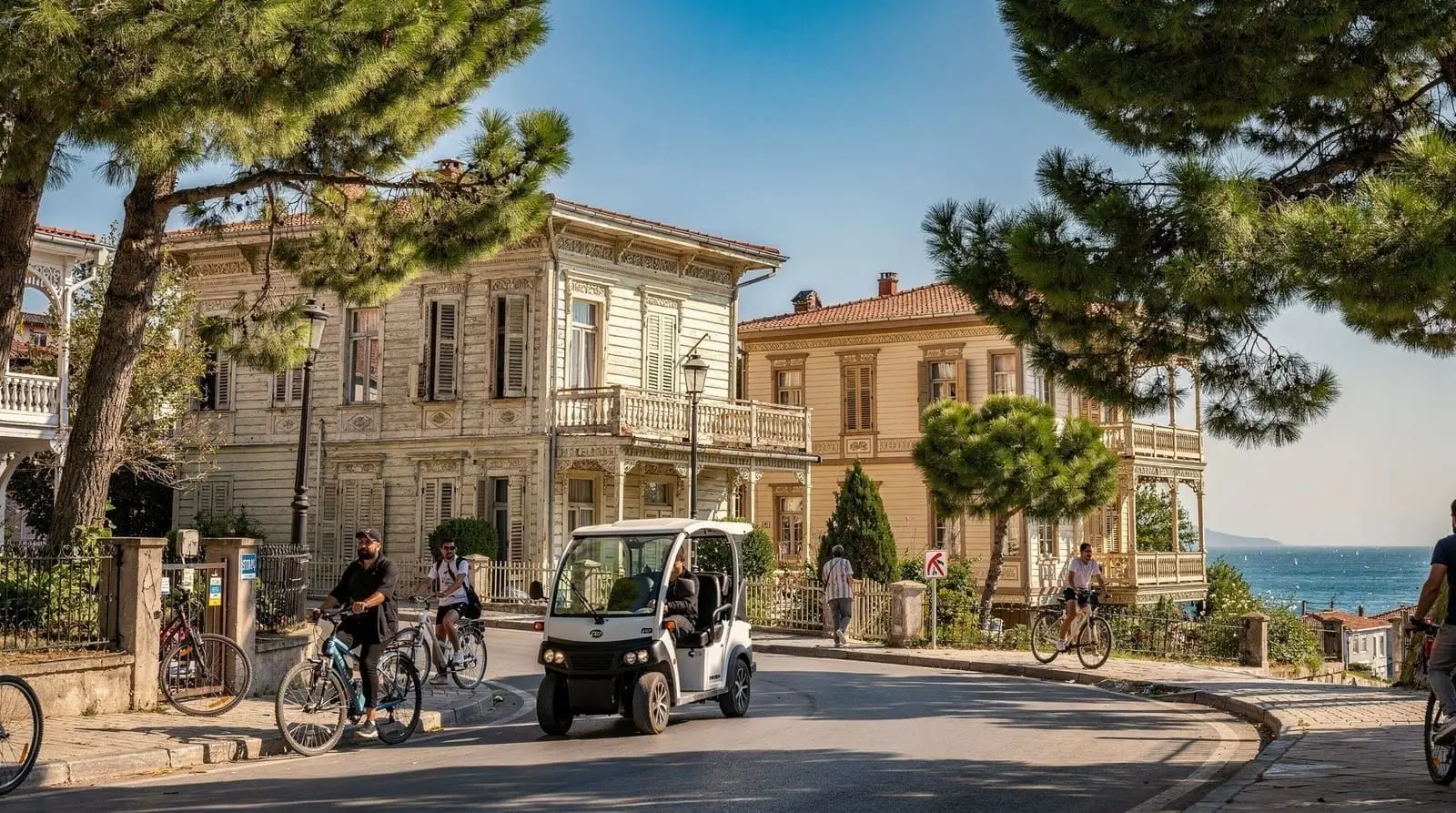
Princes' Islands
Escape Istanbul's crowds on the Princes' Islands — car-free Büyükada and its Victorian mansions, pine forests, and Marmara Sea views, 90 min by ferry.
From Istanbul: Full-Day Princes Island Tour with Lunch
Quick facts
- Distance from Istanbul
- ~20 km southeast, Sea of Marmara
- Ferry time (Büyükada)
- 90–120 min from Kabataş or Eminönü
- Fast ferry
- ~35 min from Kabataş (IDO, higher fare)
- Transport on islands
- No cars — bicycles, phaetons (horse carriages), or walk
- Entry
- Free; ferries use Istanbulkart or cash ticket
- Best island
- Büyükada (largest, most visited)
The Princes’ Islands are the most accessible true escape from Istanbul — no cars, no trams, no traffic jams. A short ferry ride across the Sea of Marmara brings you to a string of nine islands where pine-shaded hills, Ottoman-era mansions, and quiet beaches make a stark contrast to the city’s relentless energy. Büyükada is the largest and most visited; Heybeliada is quieter; Kınalıada and Burgazada have loyal local followings. All are reachable in a day, making this Istanbul’s best-value day trip.
| Where | Sea of Marmara, ~20 km southeast of Istanbul |
| Cost | ~25–30 TRY public ferry one-way; day budget 1,100–1,900 TRY |
| Time needed | A full day, arriving by mid-morning |
| Getting there | Ferry from Kabataş or Eminönü, 70–120 min (public) or 35–40 min (fast ferry) |
| Best time | April–May and September, weekdays over weekends |
What makes the Princes’ Islands worth the journey
The islands are officially called the Adalar (Islands), but the name Princes’ Islands dates to Byzantine times, when princes, deposed emperors, and later Ottoman officials were exiled here. The distance from power was, ironically, what preserved the islands’ character — no grand mosques, no fortresses, just wooden Victorian mansions (known as köşk), Greek Orthodox churches, synagogues, and Armenian churches clustered on hillsides.
Büyükada is a small island about 6.5 km long. The old town around the ferry landing concentrates most hotels, restaurants, and the main shopping street (İskele Meydanı area). Bicycles rent for around 150–250 TRY per hour (≈ 4–7 USD, mid-2026 rates) and the flat coastal loop is about 8 km. Phaetons — horse-drawn carriages — are a tradition but remain controversial on animal-welfare grounds; the flat tour costs around 800–1,200 TRY per carriage.
The two hills dominate Büyükada. The higher southern hill holds the Aya Yorgi (St George’s) Monastery, reached by a steep 30-minute walk or a winding phaeton road. The views over the Marmara are among the best in the Istanbul region. The monastery itself dates to Byzantine times and remains a pilgrimage site for Greek Orthodox Christians on St George’s Day (23 April).
Getting there: ferry options explained
The honest logistics matter here because Istanbul visitors often waste time or money on the wrong option.
Public ferry (şehir hatları / city lines): Cheapest option. Ferries depart from Kabataş (tram T1 stop, easy to reach) and Eminönü (Grand Bazaar / Spice Bazaar side). Journey time 70–90 minutes to Büyükada, stopping at Kınalıada, Burgazada, and Heybeliada first. Pay with your Istanbulkart or a single-journey token. One-way fare: roughly 25–30 TRY (≈ 0.65–0.80 USD). Ferries run hourly to every 90 minutes in high season.
Fast ferry (IDO hızlı feribot): About 35–40 minutes to Büyükada from Kabataş. Costs around 3× the regular ferry and requires a separate ticket (can’t use Istanbulkart credit for the full amount). Useful if time is tight.
Organised tour: Tours typically handle the ferry, a guide, lunch, and bicycle or phaeton ride in one package, such as this guided Princess Islands day trip by ferry from Istanbul. Best for first-timers or those who want logistical simplicity.
| Option | Time (one-way) | Cost per person | Best for |
|---|---|---|---|
| Public ferry | 70–90 min | ~25–30 TRY | Budget travellers, most flexible schedule |
| Fast ferry (IDO) | 35–40 min | ~3× the public fare | Time-pressed visitors, half-day trips |
| Organised tour | Varies, handled for you | 800–1,800 TRY all-in | First-timers wanting zero logistics |
Whichever option you choose, both Kabataş and Eminönü piers are easy to reach: Kabataş sits at the end of the T1 tram line and the Taksim-Kabataş funicular, while Eminönü is a two-minute walk from the Spice Bazaar. If you’re combining the islands with a Sultanahmet morning, Eminönü is usually the more convenient departure point; if you’re coming from Taksim or Beyoğlu, Kabataş saves a change of transport.
Island by island: which one to visit
Büyükada is the default choice, and for good reason. The highest hill, the most diverse architecture, the best selection of fish restaurants along the waterfront, and the liveliest ferry landing. The Splendid Palace Hotel (built 1908) is an icon of the island. The Adalar Museum, opened in a former orphanage building, covers the islands’ multicultural history.
Heybeliada is the second largest and significantly quieter. A strong Greek community historically, the island’s Naval War College (closed to the public) occupies one of its prominent hills. The pace here is slower and genuinely residential — far fewer tourists on weekdays.
Kınalıada is the closest to Istanbul, historically associated with the Armenian community, and has calmer swimming beaches. Good for a half-day.
Burgazada sits between Kınalıada and Heybeliada. Small, hilly, and with a loyal group of Istanbulites who return every summer. The house where Turkish novelist Sait Faik Abasıyanık lived is preserved as a museum.
Food and eating on Büyükada
The waterfront restaurants compete aggressively for tourists, so quality and value vary. The reliable spots are slightly off the main drag.
At the port, fish restaurants on Gülistan Caddesi serve grilled sea bream and mezes at predictable prices — expect 350–600 TRY per person (≈ 9–15 USD) for a full meal with a glass of wine. Avoid restaurants that quote prices only in euros or dollars without a lira price posted (price transparency is a legal requirement in Turkey, and this is a red flag).
For something simpler, bakeries and börek shops near the ferry dock sell simit, açma (soft sesame rolls), and fresh-baked börek for 50–80 TRY a piece. Several çay gardens (tea gardens) open from morning through sunset — ordering a glass of çay runs about 15–25 TRY.
For ice cream and a proper break during the bike loop, small cafés along the coastal road near the northern beaches sell dondurma and cold drinks at reasonable, non-inflated prices — these are the ones actually used by island residents rather than day-trippers, and worth seeking out over the busier port-side options.
Beaches and swimming
The beaches on the Princes’ Islands are not white-sand Caribbean-style stretches, and knowing this prevents disappointment. The shores are mostly pebble and rock, with clear but often jellyfish-affected Marmara water from late July through September. The main swimming areas are on the southern and western coasts of Büyükada.
Yörük Ali Plajı is the most organised, with sunbeds, umbrellas, and an entry fee of around 100–150 TRY (≈ 2.5–4 USD). Nakibey Beach on the north side is smaller and often calmer. Both are reachable by bicycle.
Water temperature: comfortable for swimming June through September (18–24°C); spring (April-May) is too cold for most swimmers but fine for walking.
Practical notes on timing
The islands become genuinely crowded on summer weekends — arriving before 10:00 and leaving after 16:00 avoids the worst rush-hour ferries. The islands get some of Istanbul’s best breezes in summer, which makes the heat manageable in a way the city is not.
Winter visits (November–March) are quiet, atmospheric, and almost entirely for day-tripping locals. Several restaurants and rental shops close. The ferry frequency drops but the light on the old wooden mansions in the off-season is worth it for photographers.
Ferries are cancelled in severe weather (fırtına), especially in winter and early spring. Check the IDO app or Şehir Hatları website the morning of your trip.
Connecting from Istanbul
From Sultanahmet, take tram T1 to Kabataş (end of line), then walk to the ferry terminal. Total time: 25–35 minutes. From Karaköy, the Kabataş tramway is two stops. From the Bosphorus area or Beşiktaş, there are also direct boat services in summer.
Buying a round-trip ferry ticket or tour in advance is not strictly necessary but avoids queues on busy summer weekends.
Fitting the islands into a wider Istanbul stay
The islands work best as a breather between days of heavy sightseeing. Our Princes’ Islands day trip guide goes deeper on the practical side, and the best day trips from Istanbul roundup shows how the islands compare with the other escapes on offer. If you are still deciding whether to leave the city at all, the day trip reality check is honest about what is realistic in a single day.
Ferry travel is easier once you understand the pass system, so read the Istanbulkart guide and the Istanbul ferries guide before you go. For the wider picture of getting around, the getting around Istanbul page covers trams, funiculars and boats together.
Pairing the islands with the rest of the city is simple. A morning in Sultanahmet followed by a late ferry is possible, though most people keep the islands for their own day. The Istanbul 3 days and Istanbul 4 days itineraries show where a free day fits naturally, and Istanbul for families, 4 days uses the car-free streets as a break for children. If you want to compare with another quiet corner of the city, the Kadıköy waterfront and the Asian side guide offer a similar slower pace without a long crossing.
After a day of fresh air and fish, the where to eat in Istanbul guide helps you plan a proper dinner back in town, and the best time to visit Istanbul page explains how the seasons affect an island day.
What to do in one day on Büyükada
A well-paced day on Büyükada leaves enough time to see the island without feeling rushed. The ferry from Kabataş or Eminönü departs hourly; an 09:00 or 09:30 departure gets you to the island by 11:00–11:30.
Morning: Walk from the ferry terminal directly up the main street (İskele Caddesi) toward the bicycle rental shops. Rent bikes (150–250 TRY per hour per bike) and ride the flat coastal loop counterclockwise — north side first to avoid midday sun on the return. Pass the Greek Orthodox cemetery and the shuttered Greek Orthodox Orphanage building (Büyükada Rum Yetimhanesi) at the northern end of the island. This large Art Nouveau building, built in 1898, is one of the largest wooden buildings in Europe; it has been in legal dispute between the Turkish government and the Ecumenical Patriarchate for decades and stands empty. Worth stopping to look at from the road.
Midday: Return bikes, walk up toward Aya Yorgi hill for lunch before the climb. Small cafés and restaurants near the main square serve basic menus at fair prices. Avoid the largest, most prominent waterfront restaurants with English-heavy menus and euro-denominated prices — the smaller places one or two streets back are better value.
Afternoon: Climb to Aya Yorgi Monastery. The walk takes about 30 minutes on a zigzag path; a phaeton (horse carriage) takes about 15 minutes but is more expensive and the welfare concern is genuine. The monastery complex is modest — a working Orthodox church in a whitewashed courtyard with views over the Sea of Marmara toward Istanbul in the haze. The island’s pine forest begins around the monastery and continues to the southern end.
Evening ferry: The 16:30–17:30 ferries are crowded on weekends. Either leave earlier (15:00) or later (18:30+) to avoid the crush. The ferry back at sunset, with the Istanbul skyline emerging from the haze, is one of the better views of the city available without paying for a cruise.
Cultural and historical background
The Princes’ Islands were a place of exile in Byzantine times — emperors who lost power, princes who were rivals to the throne, and inconvenient officials were banished here rather than executed outright. The distance from the capital (and the islands’ small size) made them an effective open-air prison. The Monastery of Prinkipo on Büyükada housed exiled Empress Irene in the 9th century.
Under Ottoman rule, the islands’ Greek, Jewish, and Armenian communities continued to thrive, and the 19th century saw the construction of the elaborate wooden summer villas that define the islands’ character today. Istanbul’s wealthy non-Muslim families built their summer houses here; the tradition of Istanbul residents escaping to the islands in summer continues, though today they are often weekend destinations rather than full-season homes.
The islands’ permanent population is small — Büyükada has about 7,000 residents year-round, swelling to tens of thousands in summer. Heybeliada has around 2,000 permanent residents. The other islands are tiny.
Photography on the islands
The combination of pine forests, Ottoman wooden architecture, the sparkling Marmara, and the car-free streets makes the Princes’ Islands unusually photogenic. The best shots tend to be:
- The ferry approach to Büyükada’s harbour, with the old mansions visible on the hill
- The Büyükada Rum Yetimhanesi orphanage from below
- The Aya Yorgi hilltop at golden hour
- Narrow streets of wooden houses with flowering gardens in spring (April-May)
- The Marmara sea view from the hilltop, with the Asian Istanbul skyline in the distance on clear days
Early morning light (before the tourist ferries arrive) and late afternoon are better than the flat midday sun. Winter visits, though cold and with reduced ferry service, offer misty atmospheric images when fog sits over the water.
Seasonal rhythms and when to visit
Spring (April–May): The best season for first-time visitors. Wisteria and roses bloom on the mansion gardens. The sea is not yet warm enough for swimming but the walking and cycling conditions are ideal. Fewer visitors than summer but full services available. Evenings are cool — bring a jacket for the return ferry.
Summer (June–September): The island’s peak season. July and August weekends see ferries at capacity and the waterfront restaurants full. Büyükada feels like a popular Mediterranean resort destination at its busiest. The beaches are swimmable (though water quality concerns exist in July–August due to sea currents from the Marmara). Wednesday and Thursday visits are quieter than weekends. The pine-shaded island feels cooler than central Istanbul in August heat.
Autumn (October): A second good season. The heat drops, the crowds thin, and the light on the old wooden mansions is warm and golden. A few restaurants begin to close for the season by late October, but the ferries run normally through November.
Winter (December–March): Atmospheric and solitary. Several restaurants, most bicycle rental shops, and some accommodation options close. The population drops to its permanent winter core. A winter visit captures the islands’ more melancholy character — shuttered villas, empty promenades, the occasional resident. Ferry frequency drops to 2–4 daily departures; check schedules carefully.
The environmental situation
The Princes’ Islands have faced environmental pressure from uncontrolled tourism growth, inadequate waste management, and rising visitor numbers. The pine forests were affected by a significant fire in 2021 on Büyükada, burning approximately 35 hectares and requiring replanting. The municipal ferry and fast ferry services generate wake that affects the coastline.
The horse carriages (phaetons) have been a long-running welfare controversy. Animal rights organizations have repeatedly documented poor conditions for the horses used in tourist transport. The Büyükada municipality has been in ongoing discussions about electric vehicle alternatives, but phaetons remain operational as of 2026. If you use one, the condition of the horses is visible — well-maintained versus poorly maintained stables are distinguishable. Alternatively, the electric golf cart services that some operators run are a welfare-neutral option, such as this Büyükada island electric car trip, since no combustion vehicles are allowed on the island.
The islands’ status as a protected natural and cultural site (under multiple designations) means development is restricted. This protection is real — no new large hotels can be built, and the wooden mansion character cannot be demolished for modern construction. But the protection does not extend to all forms of pressure.
Comparing the islands for different traveller types
For architecture enthusiasts: Büyükada. The concentration of late 19th-century Ottoman and Levantine wooden mansions is unique.
For quiet and local atmosphere: Heybeliada. Fewer tourists, genuinely residential feel, excellent small fish restaurants.
For families with young children: Büyükada or Kınalıada. The flat cycle path is safe; beaches are accessible; the ferry ride itself is an experience for children.
For solo or couple travellers seeking peace: Burgazada or Kınalıada on a weekday. You will largely have the place to yourself outside summer weekends.
For a first Istanbul day trip overall: Büyükada, combining the cycle loop, Aya Yorgi, and a waterfront lunch.
| Island | Best for | Character | Time needed |
|---|---|---|---|
| Büyükada | Architecture, first-time visitors | Liveliest, most facilities | Full day |
| Heybeliada | Quiet, local atmosphere | Residential, fewer tourists | Half to full day |
| Kınalıada | Quick swim, closest access | Calmer beaches, Armenian heritage | Half day |
| Burgazada | Solo/couple travellers seeking peace | Small, hilly, loyal local following | Half day |
Frequently asked questions about the Princes’ Islands
How long does the ferry take from Istanbul to Büyükada?
The standard public ferry (şehir hatları) takes about 90 minutes from Kabataş or Eminönü, stopping at three smaller islands first. The fast ferry (IDO) reaches Büyükada in about 35–40 minutes from Kabataş but costs 2–3 times more.
Do I need to book ferry tickets in advance?
For the regular public ferry, no — you can pay with an Istanbulkart or buy a token at the terminal. For the fast ferry, especially on summer weekends, booking online in advance through the IDO website avoids sellout situations. Tours should be booked at least a day ahead in high season.
Can I rent a bicycle on Büyükada?
Yes. Rental shops cluster near the ferry landing and charge around 150–250 TRY per hour (≈ 4–7 USD) for standard bikes, more for electric bikes. The flat coastal loop is about 8 km. You don’t need to be a strong cyclist — the main route is easy and largely flat.
Are there cars on the islands?
No private cars are permitted on any of the Princes’ Islands. The only motor vehicles are emergency and official service vehicles. Transport is by bicycle, phaeton (horse carriage), or on foot. This is one of the island chain’s defining characteristics.
Is it worth going to more than one island in a day?
Büyükada alone fills a comfortable day — morning ferry, lunch at the waterfront, cycle or walk the hills, afternoon swim, return ferry. Adding Heybeliada is feasible if you take an early fast ferry and move at pace, but most visitors find one island enough. Organised tours that include two islands usually spend 2–3 hours on each, which is time-limited.
What is the best time of year to visit?
Late April through May and September offer the best combination: warm but not stifling, fewer crowds, all facilities open. July and August are hotter and busier but offer better swimming. Winter is very quiet but atmospheric; ferries reduce in frequency and some restaurants close.
Are the beaches good for swimming?
They are clean and safe but mostly pebble/rock, not sand. Water temperature is comfortable for swimming June through September. Jellyfish are common in late summer. Paid beach clubs have sunbeds and showers; free entry to the rocky shores is possible outside the organised beaches.
How much does a day on the Princes’ Islands cost?
Budget roughly: return ferry 50–60 TRY public (≈ 1.50–1.80 USD) or 150–200 TRY fast ferry per person. Bicycle rental 600–1,000 TRY for half-day. Lunch 350–600 TRY per person. Beach entry 100–150 TRY. Total budget day: 1,100–1,900 TRY (≈ 28–50 USD). An organised tour with lunch included runs 800–1,800 TRY (≈ 20–45 USD) per person and is often competitive with going independently.
Can I visit the Princes’ Islands as a half-day trip?
It’s possible with the fast ferry (35–40 minutes each way), but a half day only comfortably covers a bicycle loop or a short walk and lunch — not both, plus Aya Yorgi. Most visitors find a full day, using the standard public ferry and returning in the evening, gives a far more satisfying visit for the same travel effort.
Is Büyükada or Heybeliada better for a first visit?
Büyükada, for a first visit — it has the widest range of restaurants, bicycle rental shops, and the Aya Yorgi hilltop climb, all within easy reach of the ferry pier. Heybeliada rewards a second visit or a traveller specifically seeking a quieter, more residential island atmosphere.
Top experiences
Bookable activities with verified prices and instant confirmation on GetYourGuide.


