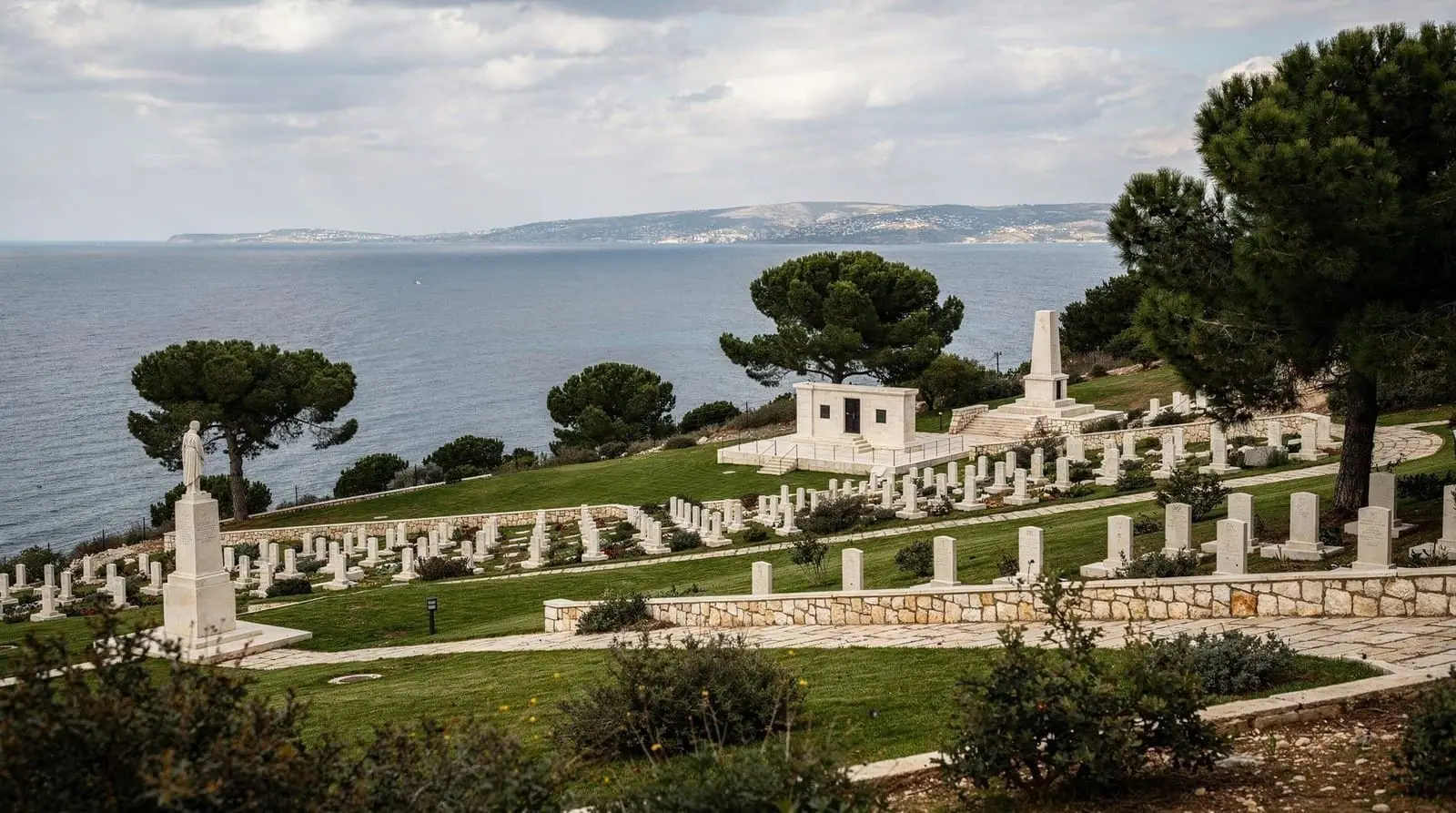
Gallipoli
WWI's defining battlefield — Anzac Cove, Chunuk Bair, and silent cemeteries from the 1915 campaign. A long but deeply meaningful day trip from Istanbul.
Gallipoli Full-Day Tour from Istanbul
Quick facts
- Distance from Istanbul
- ~330 km southwest by road
- Transfer time
- 4–5h by bus/tour from Istanbul
- Key sites
- Anzac Cove, Lone Pine, Chunuk Bair, Kabatepe Museum
- Entry
- Battlefield sites: free; Kabatepe Museum: ~80–120 TRY (≈ 2–3 USD)
- Anzac Day
- April 25 — Dawn Service at Anzac Cove, requires advance registration
| Where | Gallipoli Peninsula, ~330 km southwest of Istanbul |
| Cost | Battlefield sites free; Kabatepe Museum ~80–120 TRY |
| Time needed | A full day (4–5h transit each way); 2 days if pairing with Troy |
| Getting there | Organised tour, or bus to Çanakkale + ferry to Eceabat |
| Best time | April 25 for Anzac Day; otherwise April–May / September–October |
For the realistic pros and cons of this route versus other long day trips from Istanbul, see our day trips reality check.
Few places on earth carry the weight of Gallipoli. In 1915, the Allied forces landed on this peninsula — a narrow finger of land at the entrance to the Dardanelles — in an attempt to knock the Ottoman Empire out of World War One and open a supply route to Russia. Eight months, over 100,000 dead on all sides, and the campaign’s failure shaped national consciousness across Turkey, Australia, and New Zealand in ways that still resonate. Coming here is not sightseeing in the conventional sense. It is something quieter.
The 1915 campaign in brief
The Allied plan was strategically sound in concept: force the Dardanelles strait, capture Istanbul, knock Turkey from the war. The execution was catastrophic. The amphibious landings on April 25, 1915 — at what became known as Anzac Cove for the Australian and New Zealand Army Corps — met fierce Ottoman resistance. The terrain was brutal, the command decisions were poor, and the landing beaches were overlooked by ridges that the defenders held.
For eight months, Allied and Ottoman forces fought for the same hillsides at enormous cost. The Anzac sector never expanded far from the original beach. By December 1915, the Allies evacuated in what is considered the most competently executed part of the entire campaign. Over 56,000 Allied soldiers died; Ottoman casualties were roughly the same.
For Turkey, the defence of Gallipoli made the reputation of Mustafa Kemal, who served as a divisional commander at Chunuk Bair. He became Atatürk — the founder of the Turkish Republic.
Getting from Istanbul to Gallipoli
Gallipoli is 330 km from Istanbul by road, and the journey takes 4–5 hours. This is a long day trip — departures typically leave Istanbul at 06:00–07:00 and return after dark. It is best done with an organised tour if time is limited, since the battlefield sites are spread over a large area without reliable public transport between them.
By tour: The standard option. A licensed guide with knowledge of the campaign makes an enormous difference to the experience — the landscape looks almost unremarkable without context. Tours from Istanbul typically include coach transport, a guide, and sometimes lunch, such as this private full-day Gallipoli tour from Istanbul. Journey time each way: 4–5 hours.
By bus + local transport: Bus from Istanbul to Çanakkale (across the strait from the peninsula) takes 4–5 hours. Ferries cross the Dardanelles to Eceabat, then local tours or hired vehicles cover the battlefield. This is feasible but requires planning and full days.
The 2-day option (with Troy): Most visitors combine Gallipoli with Troy on a two-day trip. Day 1: Gallipoli; overnight in Çanakkale; Day 2: Troy. This is the sensible way to cover both and not feel rushed.
Key sites on the peninsula
Anzac Cove (Anzac Koyu): The main landing beach. Smaller than most visitors imagine — it is a narrow strip backed by steep cliffs, immediately explaining why the landing was so difficult. A commemorative stone marks the original position. The beach itself is quiet and unrestored; the landscape gives a visceral sense of the terrain.
Lone Pine (Kanber Tepe): The Australian memorial and cemetery, named after a single pine tree that was here during the fighting. The cemetery contains 4,932 identified burials and 3,268 more commemorated by name. The tree growing at the memorial is a descendant of the original.
Chunuk Bair: The highest point captured by the Anzacs — briefly, in August 1915. The New Zealand memorial stands here, and on clear days the Dardanelles and the Sea of Marmara are both visible. A statue of Atatürk stands on the ridge.
Johnston’s Jolly, Quinn’s Post, Courtney’s Post: A string of positions along the ridge where Australian and Ottoman trenches were sometimes metres apart. The terrain gives a physical sense of the static warfare that developed.
Kabatepe Military Museum: A small but well-curated museum near the coast with uniforms, weapons, personal effects, and letters from both sides. Entry around 80–120 TRY (≈ 2–3 USD). The personal items — including a watch stopped by shrapnel — are more affecting than the military hardware.
Helles Memorial: On the southern tip of the peninsula, the British and Irish memorial towers over the fields. A different scale and character from the Anzac sector. Less visited.
Anzac Day: April 25
The Dawn Service at Anzac Cove begins at 05:30 on April 25 each year and draws thousands of Australian and New Zealand visitors. It requires advance registration through the Australian and New Zealand governments and is a major logistics event.
If you want to be there on April 25, plan months ahead. Accommodation in Çanakkale and Eceabat sells out quickly. Organised pilgrimage tours handle logistics but must be booked very early.
For all other dates, the peninsula is far quieter and the experience is more contemplative.
Practical matters
The battlefield sites are spread over approximately 20 km of rugged peninsula. Without a vehicle or tour, moving between them is slow. A full circuit of the main Anzac sector sites takes 4–5 hours on the ground.
Wear comfortable shoes — some paths are uneven. There is limited shade on the ridgelines; bring water and sun protection in summer. The heat in July–August is uncomfortable; April–May and September–October are better.
Visiting with a licensed guide adds substantial depth. The battlefield is not self-explanatory, and the best guides connect individual graves, terrain features, and diary extracts in ways that change the experience entirely.
Combination with Istanbul and Troy
Gallipoli fits naturally into a Turkey itinerary as a pause between Istanbul and the Aegean. The route from Istanbul through Gallipoli and then south to Troy, Ephesus, and beyond follows a logical geographical flow.
From Istanbul’s perspective, Gallipoli and Troy together form the strongest 2-day excursion in the Marmara region — historically dense and covering different periods (WWI Gallipoli, Bronze Age Troy) that complement rather than compete.
The meaning of Gallipoli for Australia, New Zealand, and Turkey
The 1915 campaign was militarily inconclusive for both sides. The Allies failed to capture the peninsula; the Ottomans failed to destroy the landing force. But the consequences were transformative for national identity.
Australia and New Zealand: The Anzac Corps — primarily young men from farming and working-class backgrounds, many on their first overseas journey — distinguished themselves through tactical initiative and individual courage under conditions that repeatedly turned catastrophic. The campaign became a founding myth of both nations: the idea that national character was forged under fire, that sacrifice created identity. Anzac Day (April 25) is the most solemnly observed public holiday in both countries.
Turkey: For the Ottoman Empire, Gallipoli was a rare defensive success in a war that was going badly everywhere else. The campaign produced the leader who would save the empire’s successor state: Mustafa Kemal’s competent defence of Chunuk Bair gave him national standing he otherwise would not have had. Without Gallipoli, there may have been no Atatürk, and without Atatürk, no Turkish Republic. The site is accordingly a place of national pilgrimage, not just for Anzacs.
The paradox: The opposing sides have arrived at a shared respect that is unusual in war commemoration. Atatürk’s 1934 address to the “Johnnies and Mehmets” — in which he called on Australian and New Zealand mothers to rest easy, for their fallen sons were now the sons of Turkey — is quoted at most Anzac Day services and was not diplomatic language but a genuine expression of Ottoman Muslim belief about the honoured dead. The Gallipoli peninsula is a place where enemies have made peace across a century.
The landscape and how to navigate it
The Gallipoli Peninsula (Gelibolu Yarımadası) is a roughly 60 km-long, narrow strip of land between the Aegean Sea and the Dardanelles strait. The Anzac sector occupies the northwest coast — an area of about 15 km² of steep, scrubby ridges that are immediately recognizable from the battle accounts.
The main visitor approach is from Eceabat on the European side of the Dardanelles (reached by ferry from Çanakkale). From Eceabat, a road runs north along the coast to the Anzac sector. The British and French positions are at the southern tip of the peninsula (Cape Helles) — a separate 30-minute drive.
Without a vehicle, movement between sites is difficult. Tours that include a minibus are the practical solution for visitors without their own transport.
The Gallipoli peninsula is today a national park (Gelibolu Yarımadası Tarihi Milli Parkı). The battlefield sites are protected from development, and the landscape — thorny oak scrub, pine plantings over shrapnel-scarred ground, shallow valleys that formed the geography of months of fighting — is largely intact. Rabbits and wild boars have returned. The contrast between the pastoral present and the documented past is one of the features most commented on by first-time visitors.
What a good guide adds
Gallipoli is one of the sites where the guide-visitor quality gap is widest. A poor guide delivers the basic dates and casualty figures that you could read from a Wikipedia article in the van. A good guide brings battalion-level accounts: the specific attack that failed at this exact saddle, the letter written from the position at that exact viewpoint, the officer who was killed 10 metres from where you are standing.
The best Gallipoli guides specialise in the campaign — many have spent years researching regimental histories and can connect individual graves in the cemeteries to specific actions. Ask your tour operator about the guide’s background before booking. Some established operators have guide biographies on their websites.
For Australian and New Zealand visitors with ancestors who served at Gallipoli, pre-researching your family member’s unit and approximate position before arriving makes the visit substantially more personal and specific.
Reading the landscape before you arrive
The physical geography of Gallipoli is central to understanding why the campaign developed as it did. The peninsula is narrow (3–6 km wide in the Anzac sector) and divided by steep ridges running roughly north-south. The ridgelines — the commanding ground — are what both sides fought for throughout the campaign.
Anzac Cove is backed almost immediately by cliffs and steep ridges. The men who came ashore on April 25 had to climb almost vertically under fire. The objective was to reach the main ridge (the Sari Bair range) and control the overlooking ground. They never fully achieved this. Chunuk Bair, the highest point of the Sari Bair range, was briefly held by New Zealand forces in August 1915 but could not be held against counterattack.
Understanding this helps explain what you see at the site. The Anzac sector looks small — the distances between positions are tens or hundreds of metres, not kilometres. The closeness of the opposing trenches (sometimes 5–10 metres at points like Quinn’s Post) created a situation of constant close-range combat, underground mine warfare, and psychological strain. Eight months in these conditions, at such close quarters, produced a kind of mutual recognition between adversaries that the commemorative culture of both sides reflects.
The cemeteries
There are over 30 Commonwealth War Graves Commission cemeteries on the Gallipoli Peninsula, and dozens of Turkish memorials. The cemeteries are maintained to the same standard as CWGC cemeteries worldwide — clean headstones, trimmed grass, flowering plants.
Lone Pine Cemetery and Memorial contains 4,932 graves and memorialises 3,268 whose remains were never found or identified. The register books at the entrance allow visitors to look up specific individuals.
Chunuk Bair New Zealand Memorial commemorates New Zealand soldiers with no known grave. The inscription and setting on the commanding ridge are dignified and direct.
Beach Cemetery (Anzac Cove): A small cemetery at the cove itself. The grave inscriptions include many from soldiers killed on the first day of landing — April 25, 1915.
Çanakkale Martyrs’ Memorial (Abide): The large Turkish national monument at the southern tip of the peninsula, commemorating the Ottoman dead. A different aesthetic from the CWGC cemeteries — larger, more monumental — but conveys the scale of Turkish losses (estimated 56,000+ dead).
Şehitler Abidesi (Martyrs’ Monument): A smaller Turkish memorial near the Anzac sector, frequently visited by Turkish school groups and families.
Practical considerations
Physical requirements: The main sites involve moderate walking on uneven terrain. Lone Pine and Chunuk Bair are reached by short walks from car parks. The beach walk to Anzac Cove is flat. The ridge positions involve steeper paths but none are technically demanding.
Time required: A thorough day visit covers the Anzac sector (Anzac Cove, Lone Pine, Chunuk Bair, Johnston’s Jolly) plus the Kabatepe Museum in 5–6 hours on the ground. The southern (Helles) sector adds another 2 hours. Most day tours from Istanbul focus on the Anzac sector; the southern sector is included only on longer tours.
Weather: The peninsula can be windy and exposed. Even in summer, the Aegean winds make a light jacket useful. In spring and autumn, bring a warmer layer for early morning visits.
Gallipoli vs other long day trips from Istanbul
| Day trip | Distance | Character | Realistic for a rushed day trip? |
|---|---|---|---|
| Gallipoli | ~330 km | Sombre WWI battlefields and cemeteries | Long but doable; better as 2 days with Troy |
| Troy | ~360 km | Bronze Age ruins, smaller site | Yes, pairs naturally with Gallipoli |
| Edirne | ~230 km | Ottoman mosques, former capital | Yes — the Edirne day trip guide covers it |
| Şile/Ağva | ~100 km | Black Sea coast villages | Easy half-day, see the Şile/Ağva guide |
| Princes’ Islands | ~20 km by ferry | Car-free islands, relaxed pace | Yes, the easiest of the group |
Compared to Istanbul’s other long-distance day trips, Gallipoli asks for more physically and emotionally — it’s not a scenic outing, it’s a pilgrimage site. Our best day trips from Istanbul guide ranks all the realistic options side by side, and the Gallipoli and Troy from Istanbul guide covers this specific route in full logistical detail.
Frequently asked questions about Gallipoli
Is Gallipoli worth visiting from Istanbul?
Yes, but primarily for those with an interest in military history, WWI, or the national stories of Turkey, Australia, or New Zealand. It is not a conventional tourist attraction — it is a sombre, historically significant place. Visitors who go with a good guide and some background knowledge consistently find it deeply moving. Those expecting a beach resort will be disoriented.
How long does the bus take from Istanbul to Gallipoli?
The journey to Eceabat (the main gateway town on the peninsula side) takes about 4–5 hours by road, including the Dardanelles ferry crossing from Çanakkale. Organised tours depart Istanbul around 06:00–07:00 and return by 22:00–23:00. This is a long day.
Do I need a guide at Gallipoli?
Not legally, but practically yes. The battlefield is spread over a large, hilly peninsula where the landscape alone does not communicate the history. A licensed guide who knows the campaign — ideally with first-hand research into the specific battalions and attacks — transforms the visit. The best Gallipoli guides are specialists; ask tours specifically about their guide’s qualifications and experience at Gallipoli.
What is Anzac Day and how do I attend?
Anzac Day is April 25, the date of the 1915 landing. The Dawn Service at Anzac Cove begins at 05:30 and is attended by thousands of Australian and New Zealand pilgrims as well as Turkish officials. Attending requires advance registration through official government channels (Australian or New Zealand Department of Veterans’ Affairs). Book accommodation in Çanakkale months in advance. Organised pilgrimage tours handle all logistics.
Can I visit Gallipoli in winter?
The sites are open year-round, and winter offers a completely solitary experience. Rain and cold are common from November through February. Some tour operators reduce services in winter; independent travel by bus is more practical then. The landscape is more dramatic in wet weather.
How does Gallipoli combine with a Troy day trip?
Most effectively as a 2-day itinerary: Day 1 departing Istanbul early, spending the afternoon at Gallipoli, overnight in Çanakkale; Day 2 at Troy, afternoon return to Istanbul. This avoids the exhaustion of a same-day return from Gallipoli and gives adequate time at both sites.
Is there an entry fee for the Gallipoli battlefields?
The main battlefield sites and cemeteries are free. The Kabatepe Military Museum charges a small entry fee (around 80–120 TRY / 2–3 USD). Some visitor centres charge nominal amounts. Bring cash; card acceptance is inconsistent at smaller sites.
Is Gallipoli a good choice compared to Istanbul’s other day trips?
It depends what you’re after. Gallipoli is the most emotionally demanding of Istanbul’s long day trips — closer in spirit to a pilgrimage than sightseeing. If you want scenery or a lighter day, Şile/Ağva or the Princes’ Islands are easier options; see the comparison table above and the best day trips from Istanbul guide for the full picture.
Top experiences
Bookable activities with verified prices and instant confirmation on GetYourGuide.


